First Love: Homage to the “Factory Girls*”
「女工さん*」の初恋
A site-specific installation by Research and Creative Residency
Dedicated to the girls who spent their youth in this area, dreaming of the future.
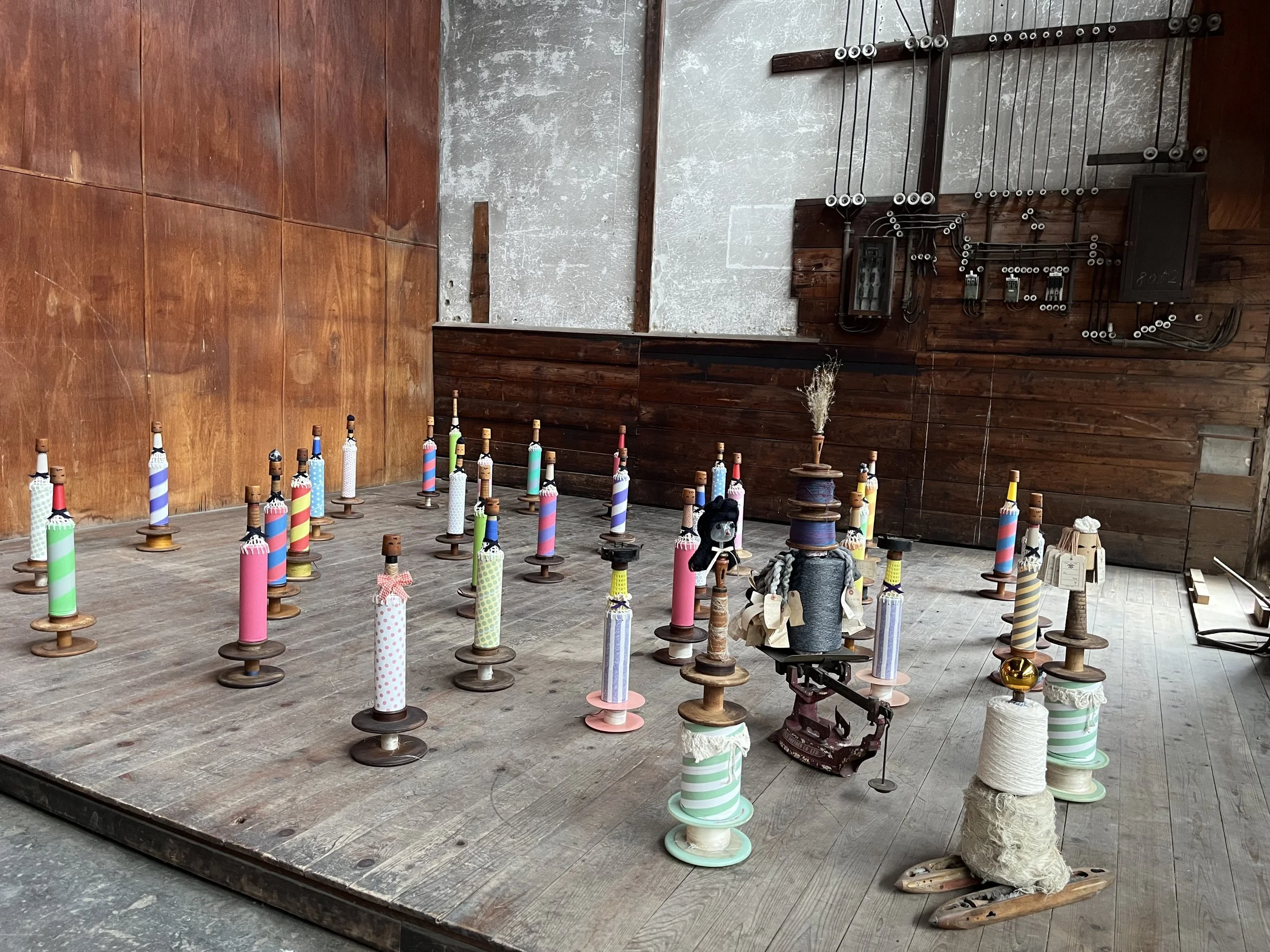
“The Research-based residency in Ichinomiya, a city renowned for its textile heritage, Shimojo encountered, sensed and imagined the stories of female factory workers. Drawing from these narratives, she created part of the work in collaboration with local residents, weaving together regional memory and atmosphere, and interlacing the past and present into a site-specific installation.”
at mh PROJECT, Aichi, Japan
Exhibition April 29 - August 23, 2026
Research and Creative Residency April 14- April 28, 2026
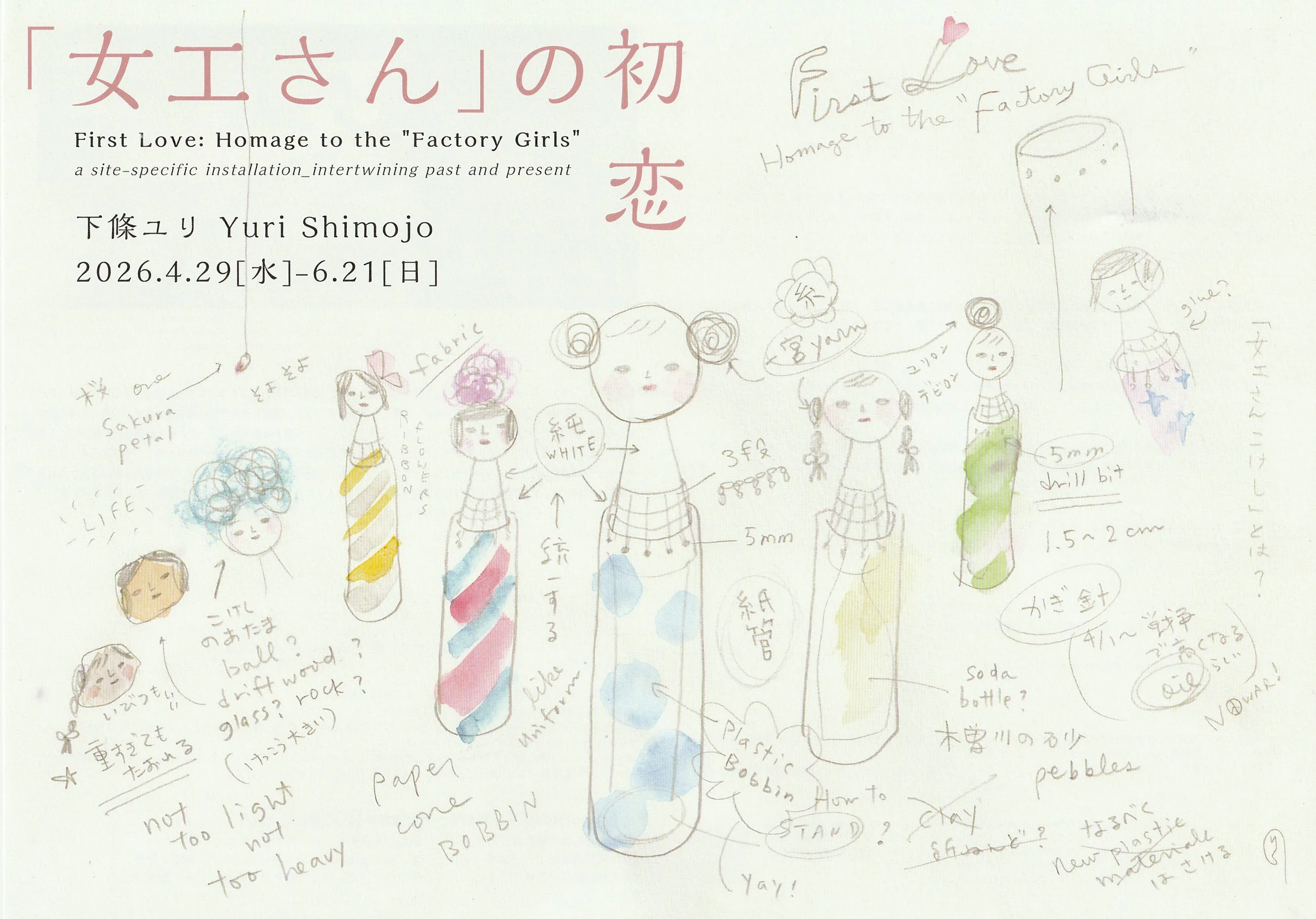
Statement
Visiting Ichinomiya, I reflected on the good old bustling days. Beautiful classical houses with traditional gardens, faded shop signs, I thought of the girls who worked in the "sawtooth roof factories" back then, and the behind-the-scenes story of the once-flourishing wool textile industry.
I had the opportunity to hear the story of a former factory worker, once known as "Orihime," the weaving princess. She came to an unfamiliar land at the age of 15 and worked hard, six days a week from dawn until late at night, for 10 years. She missed her faraway hometown, but she was happy to be able to send money to her mother, who was suffering even harder than she was as a heavy manual laborer in a male-dominated field. "That's just how it was in those days." She repeatedly said.
At her small live-in factory, where she lived and worked for 10 years, she shared a six-tatami-mat room with a girl from the same hometown. "We are still good friends.” Her gentle gaze fixed on the distance made me wonder what their daily conversations, their friendships, and their first loves were like, and what dreams they had for the future.
We must not forget that behind the prosperity of the industrial economy lay the labor force of socially vulnerable people, including young girls, many of whom lived in harsh conditions.
However, amidst this, I can’t stop imagining how adolescent girls permeate the air like the fragrance of quiet flowers, with a dream of blooming that represents the strength all humanity needs to survive, and is a wisdom we could learn, I believe.
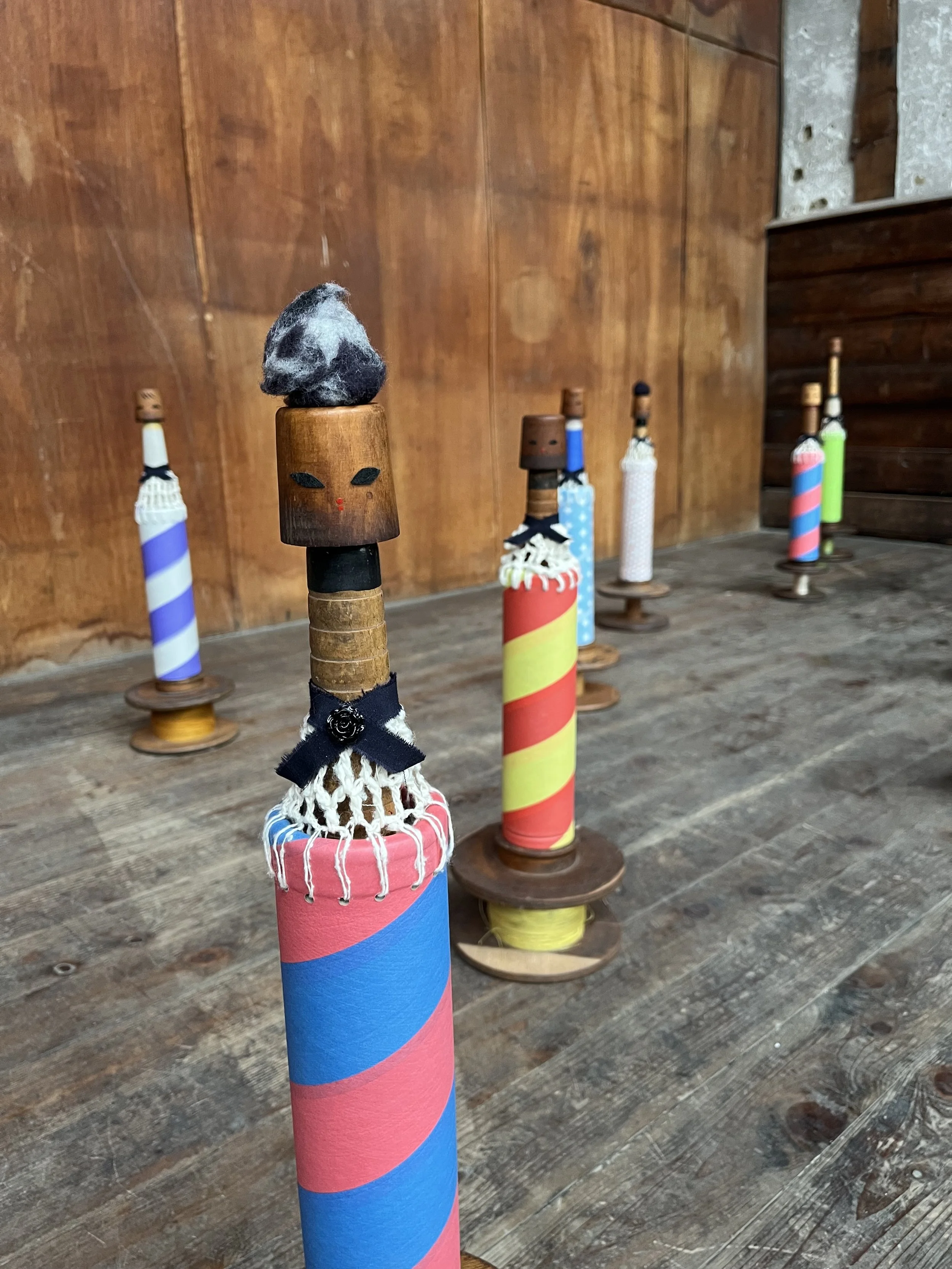
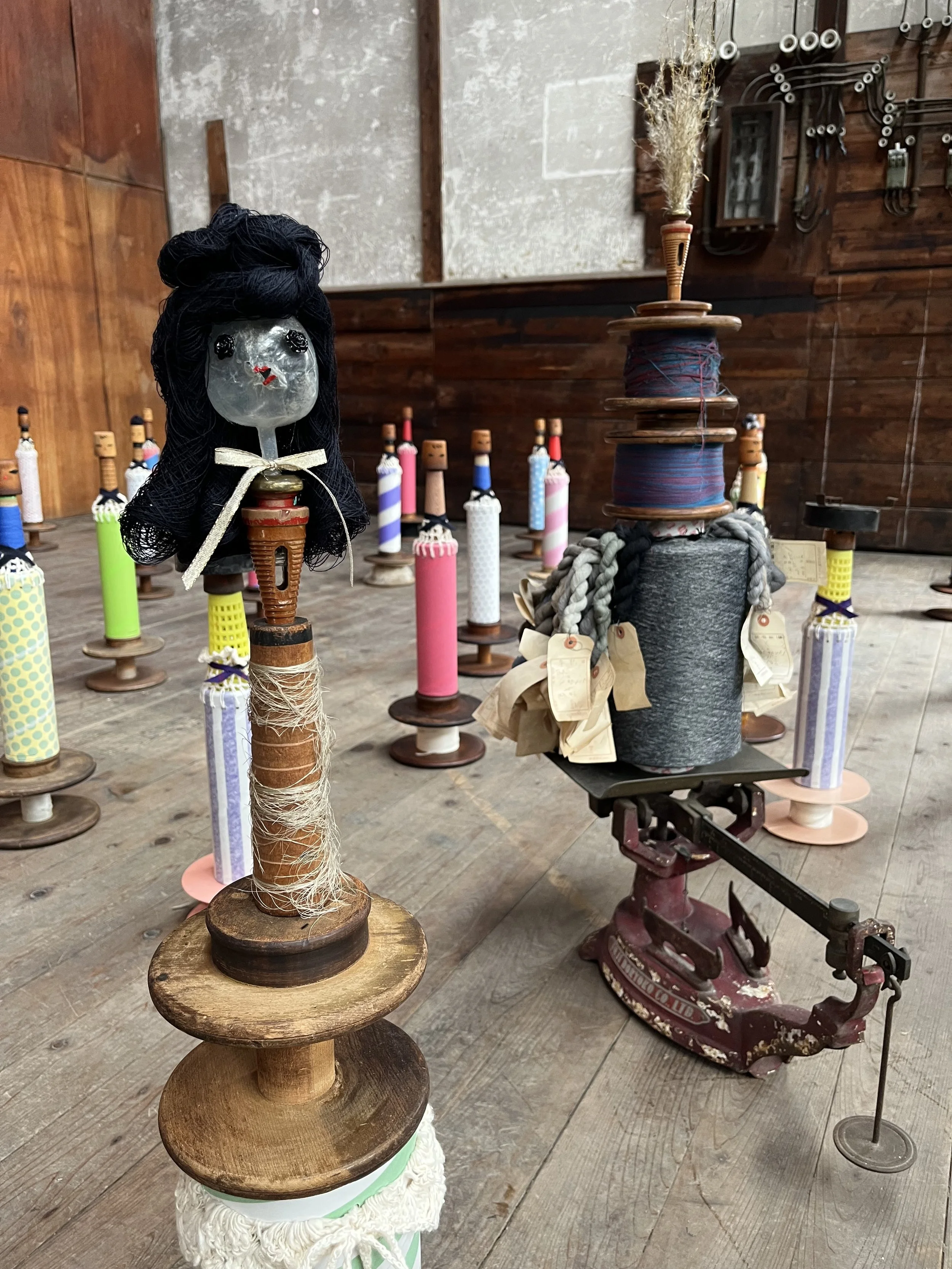
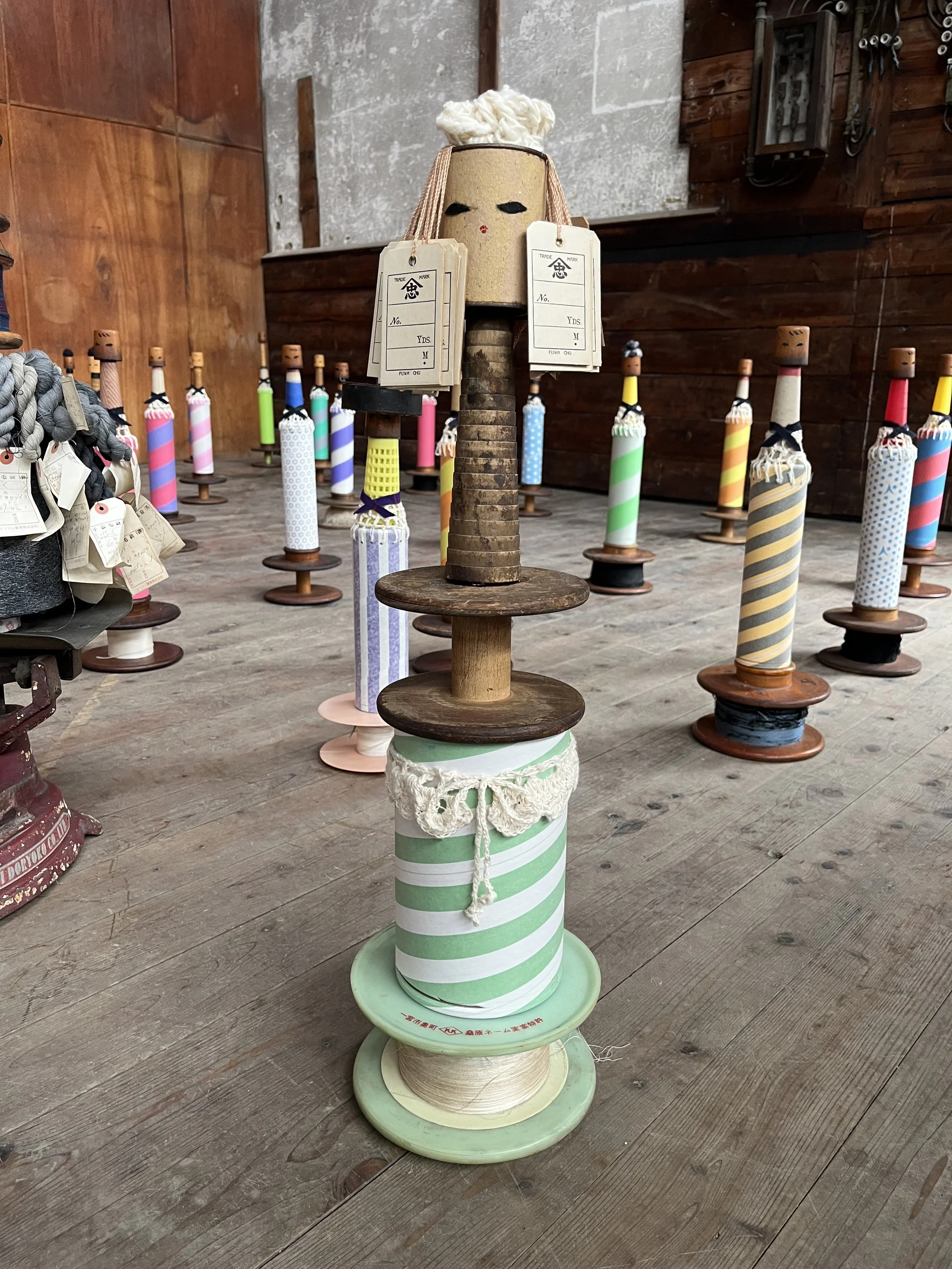
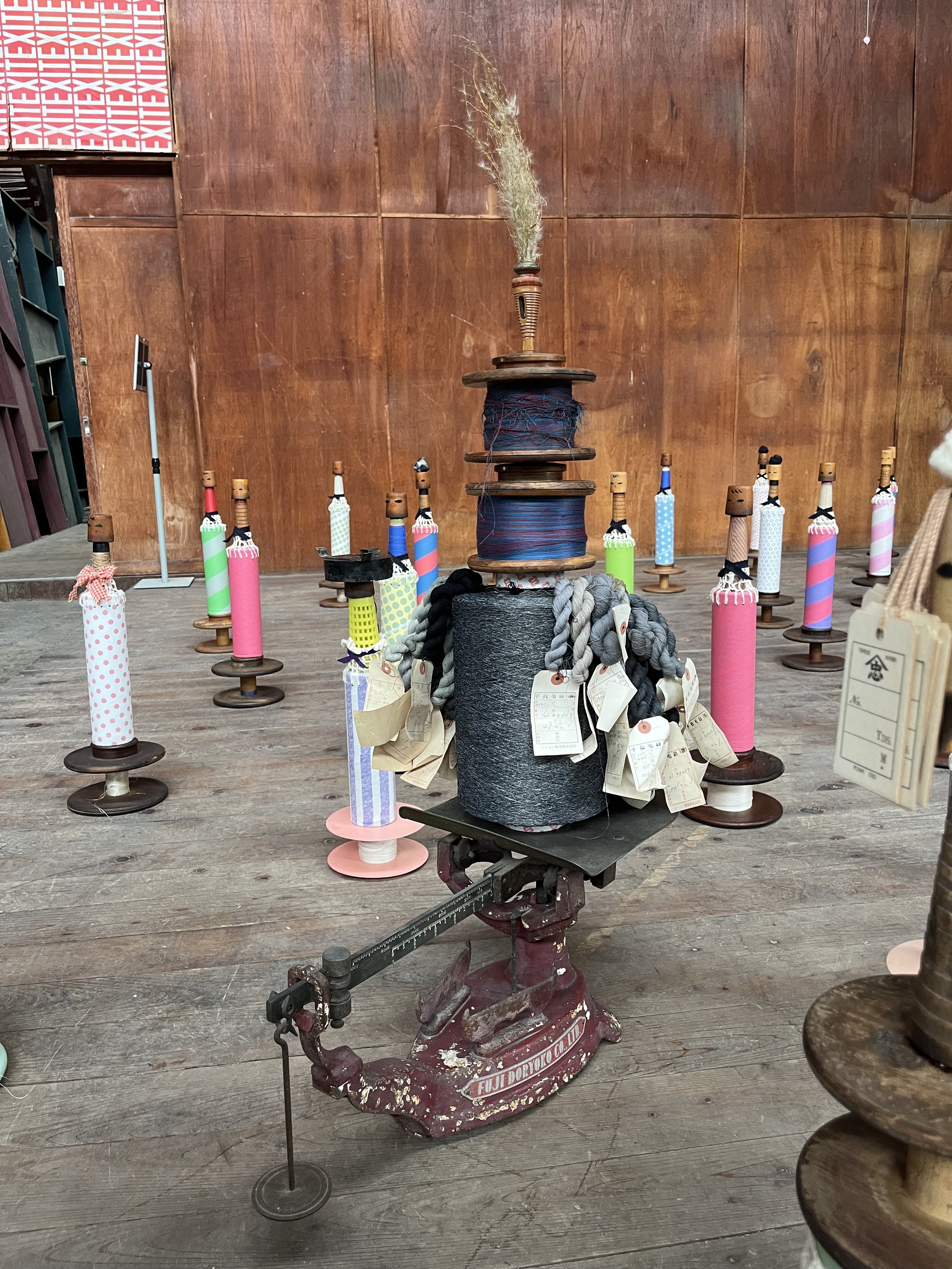
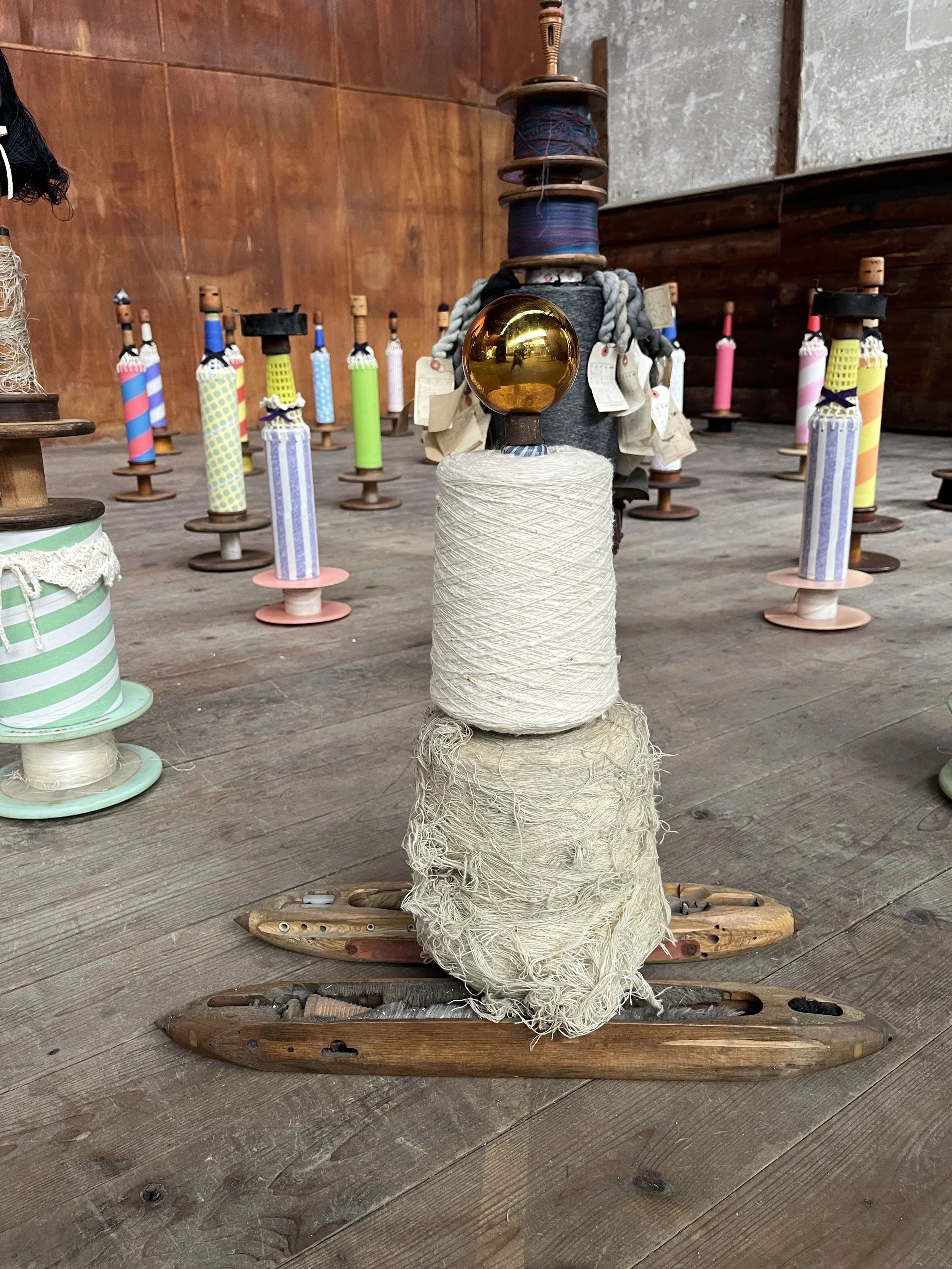
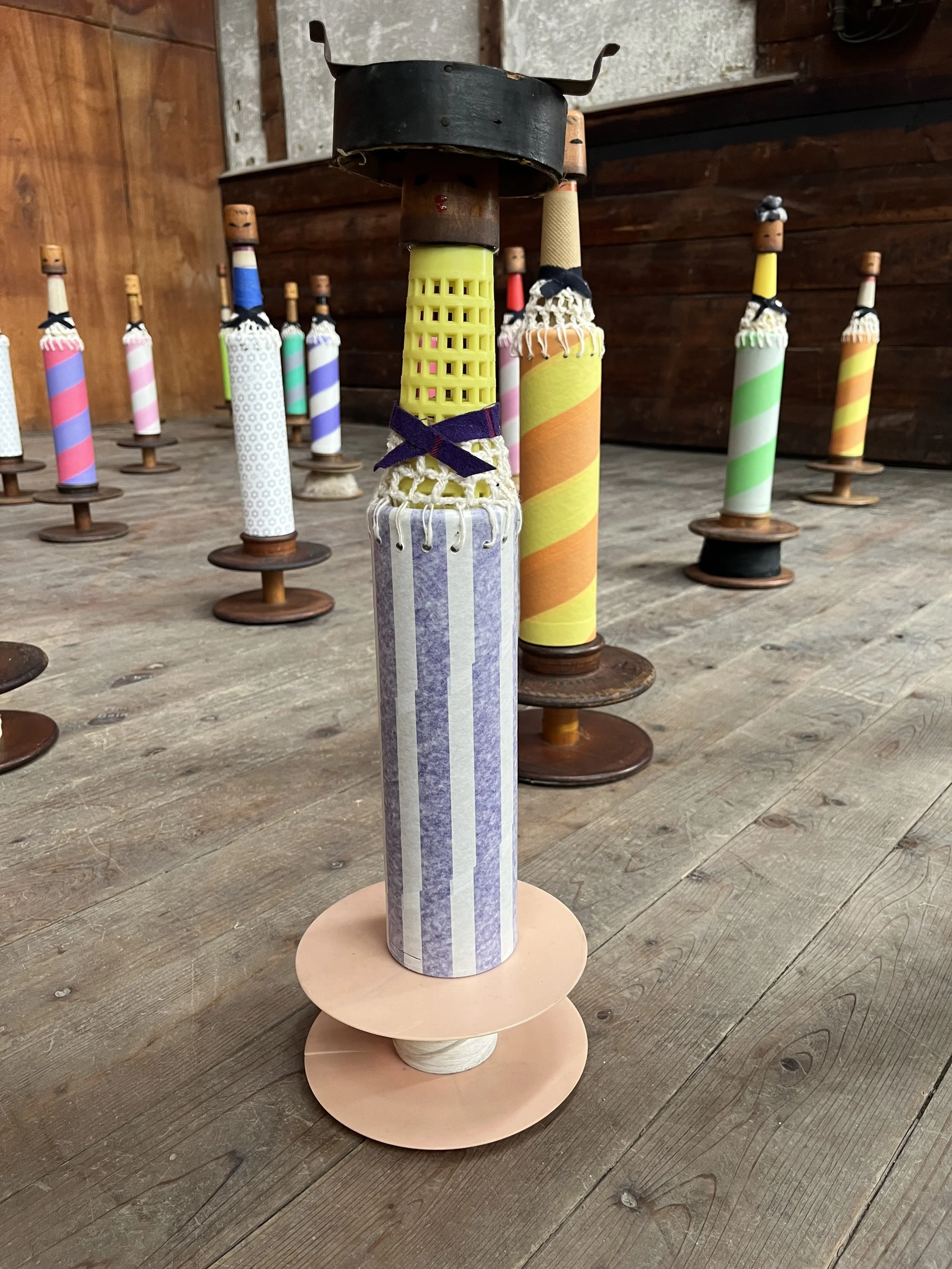
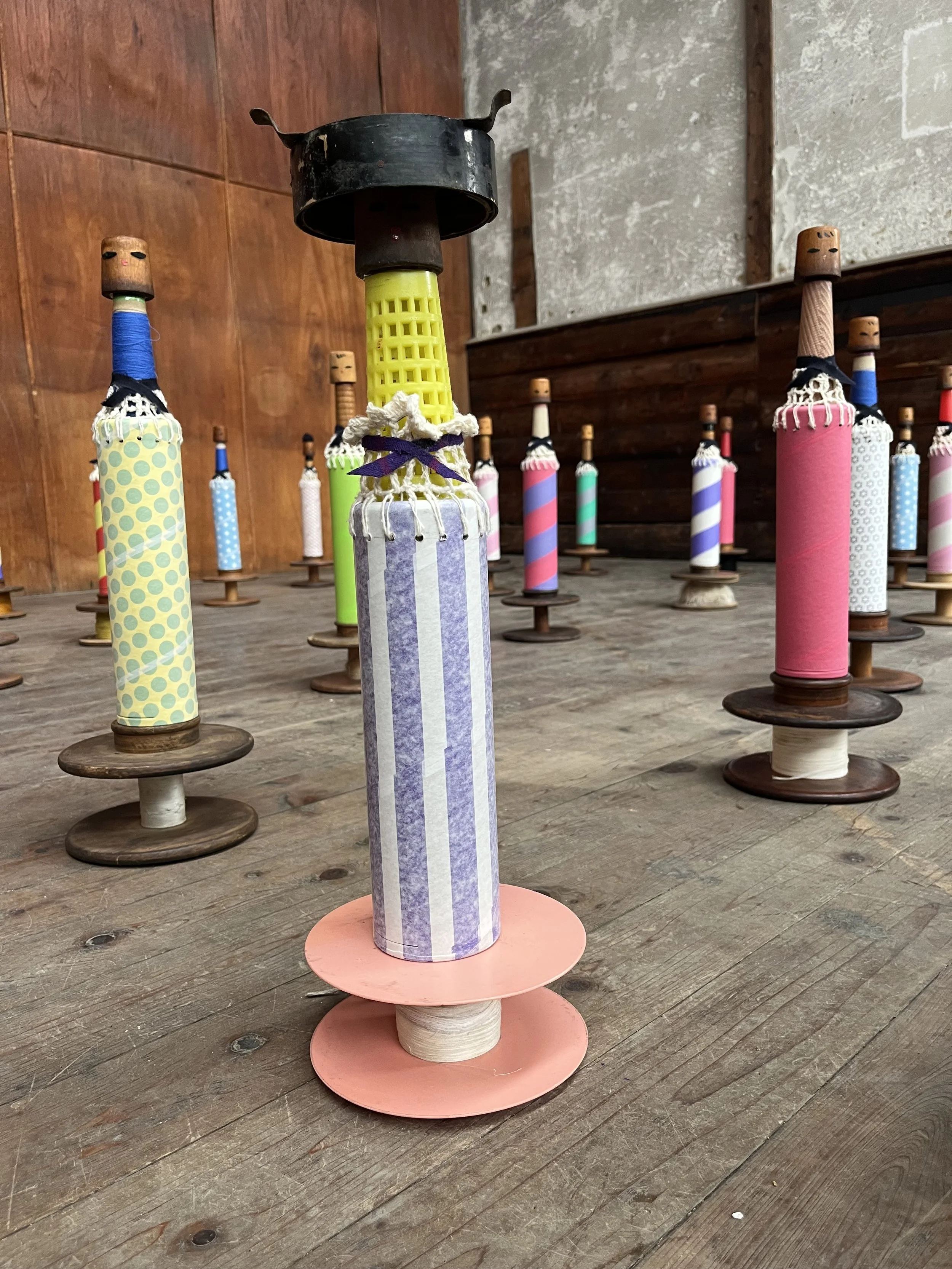
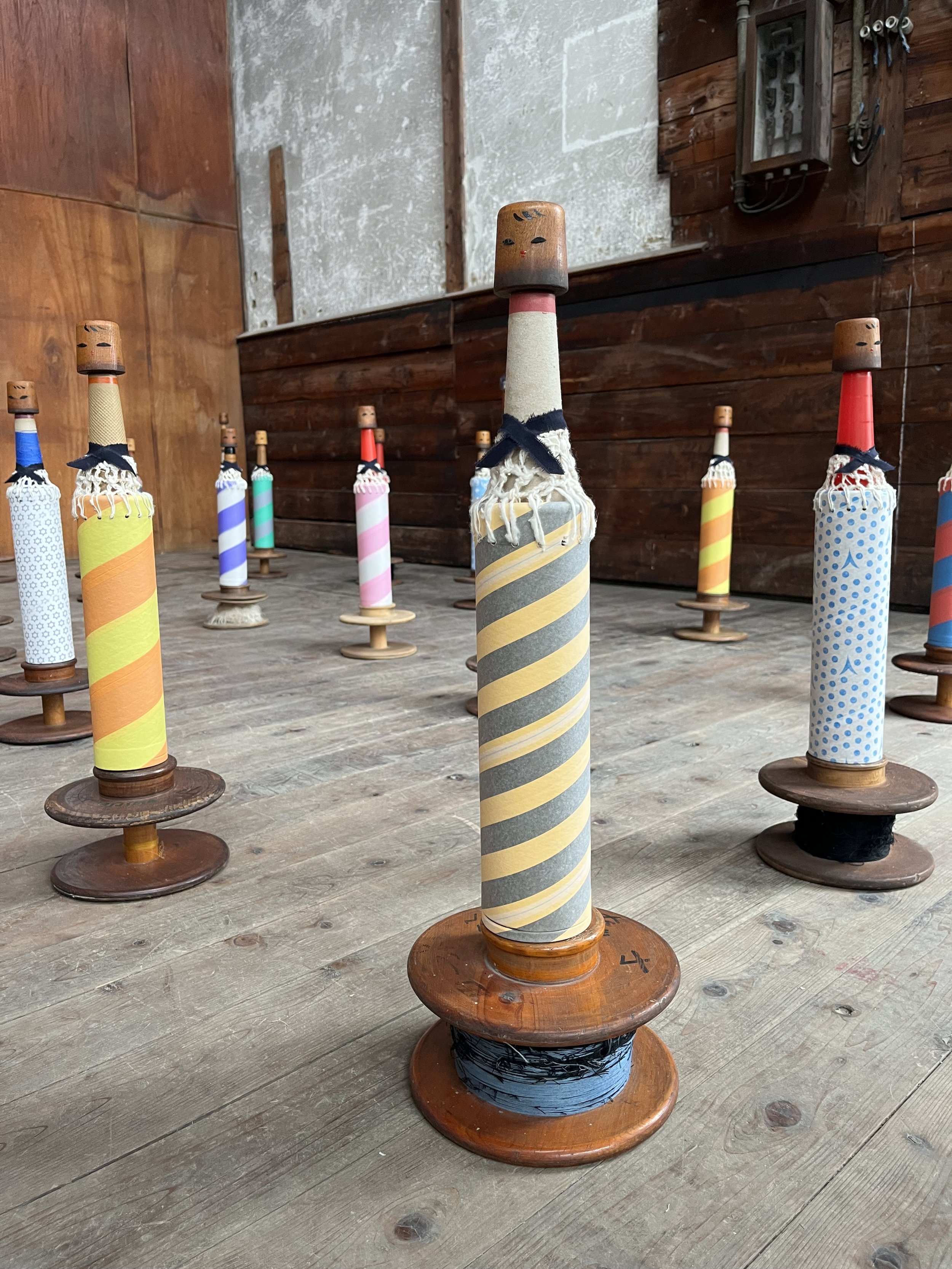
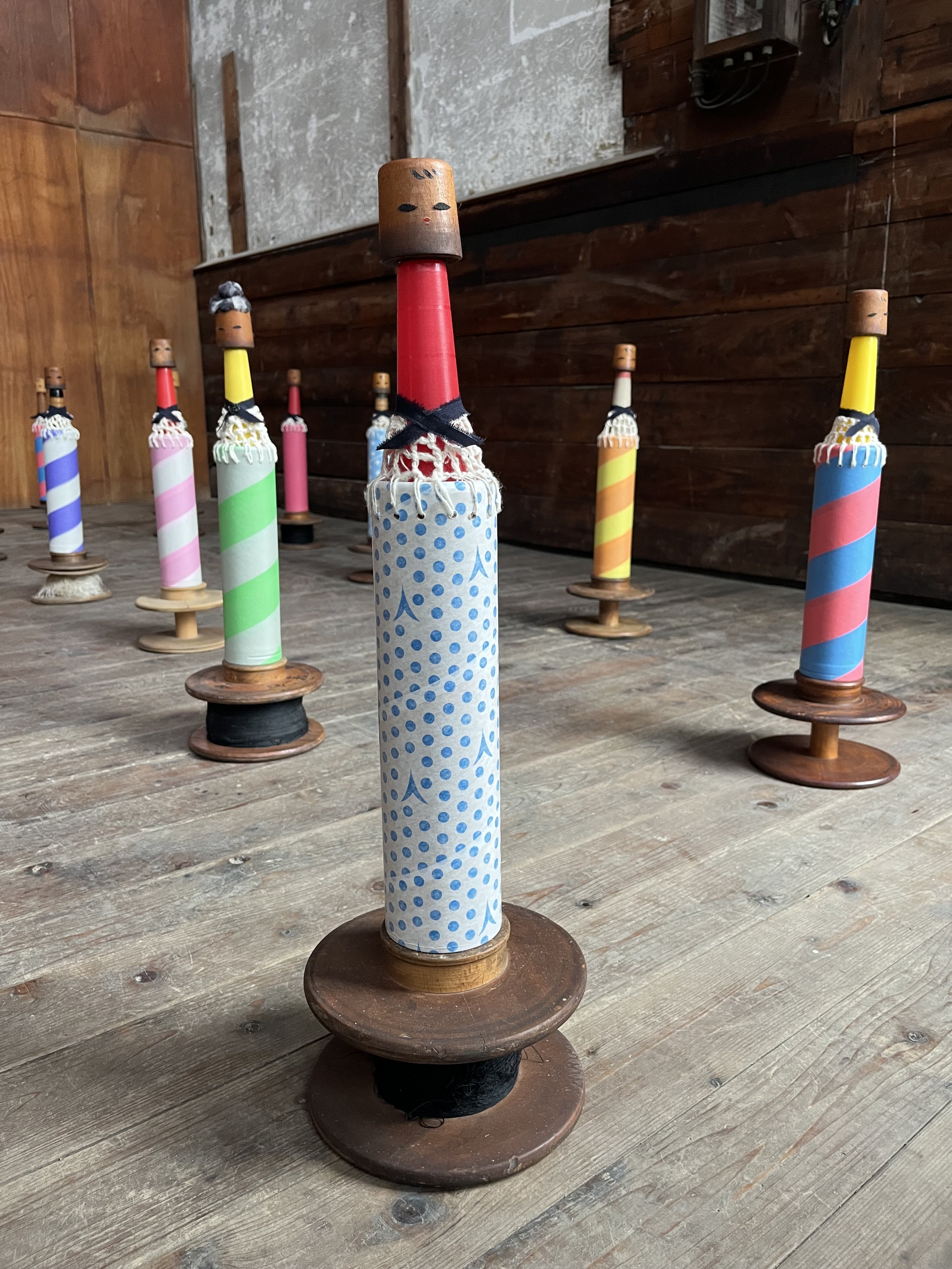
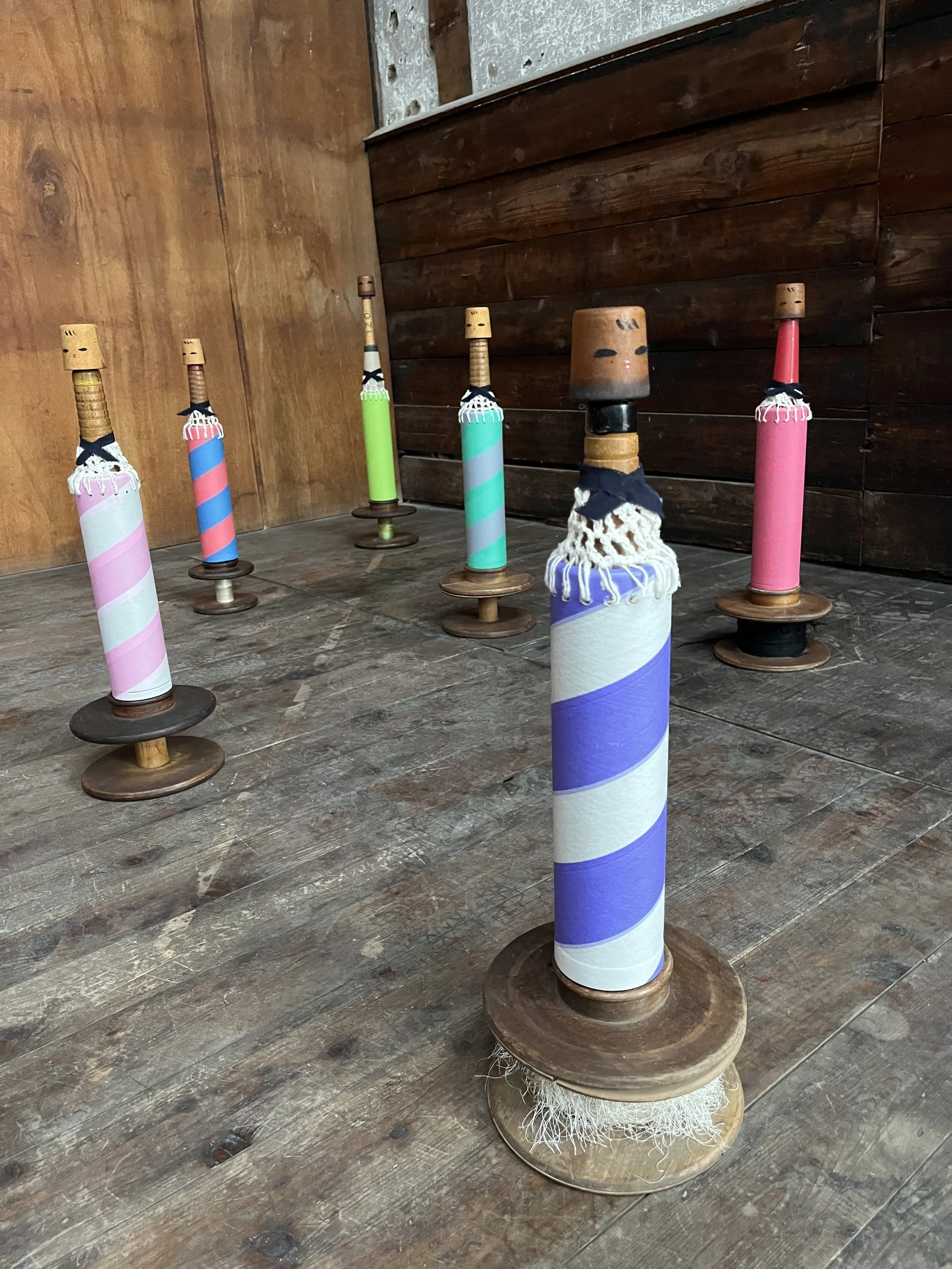
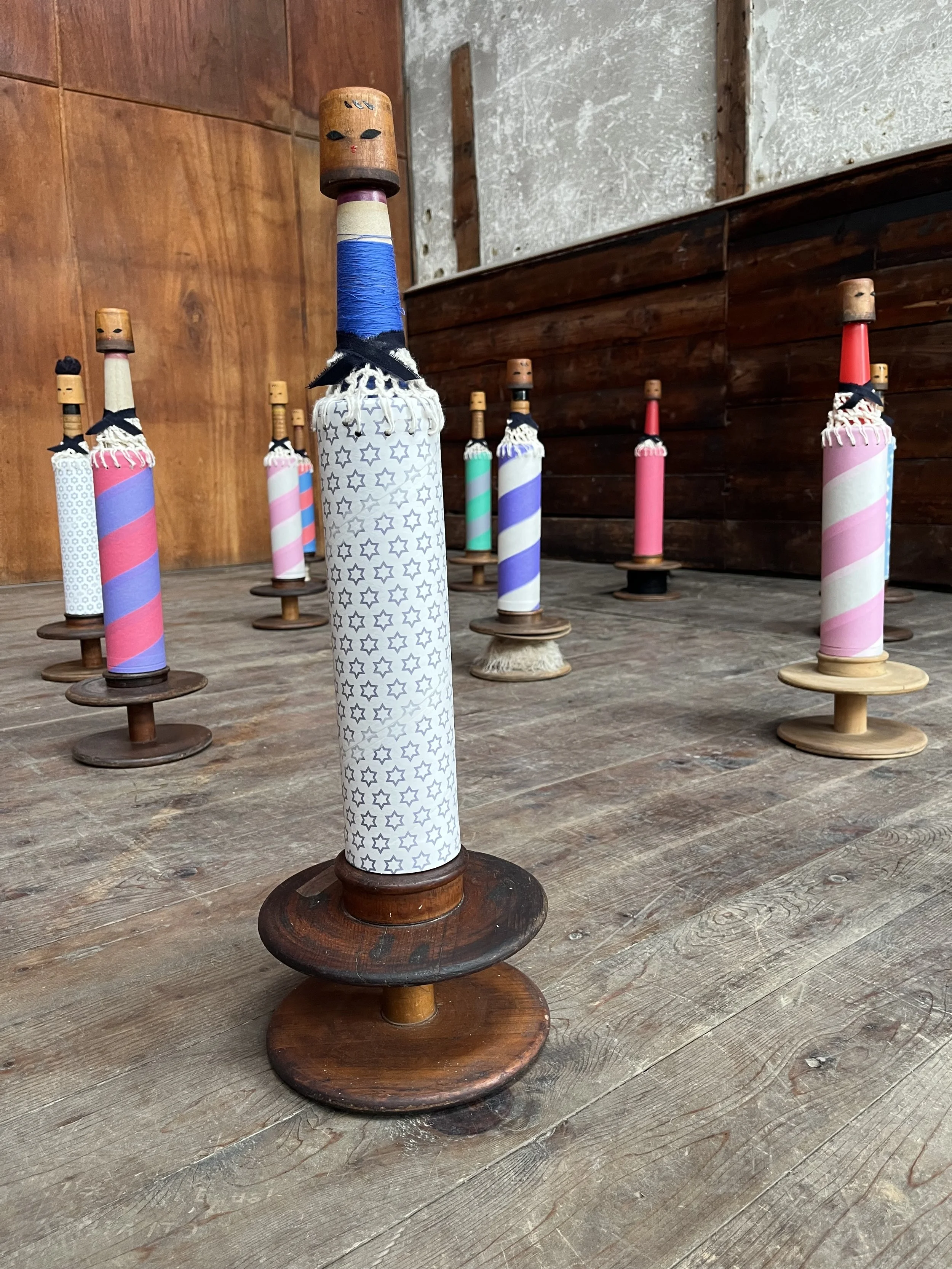
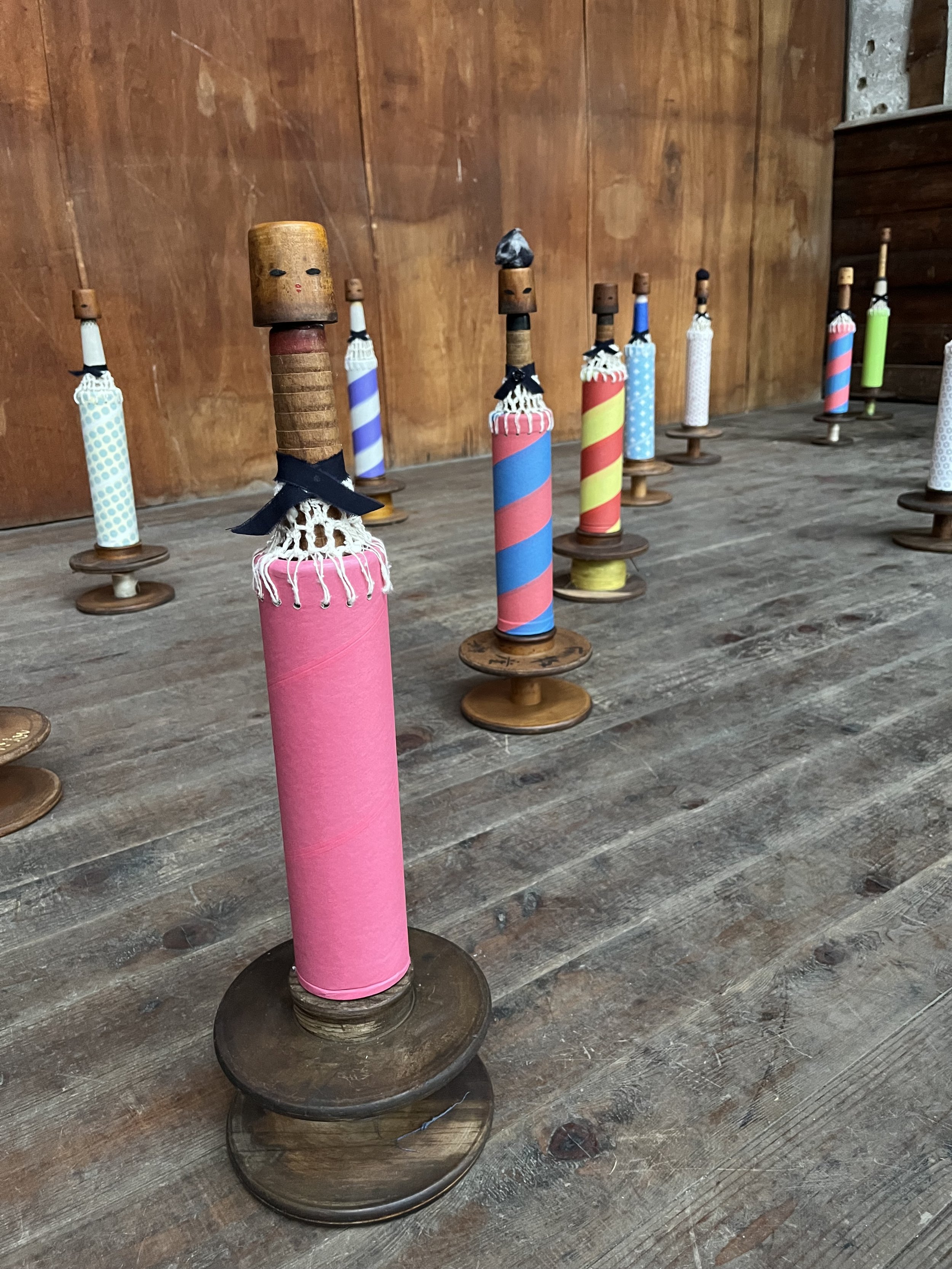
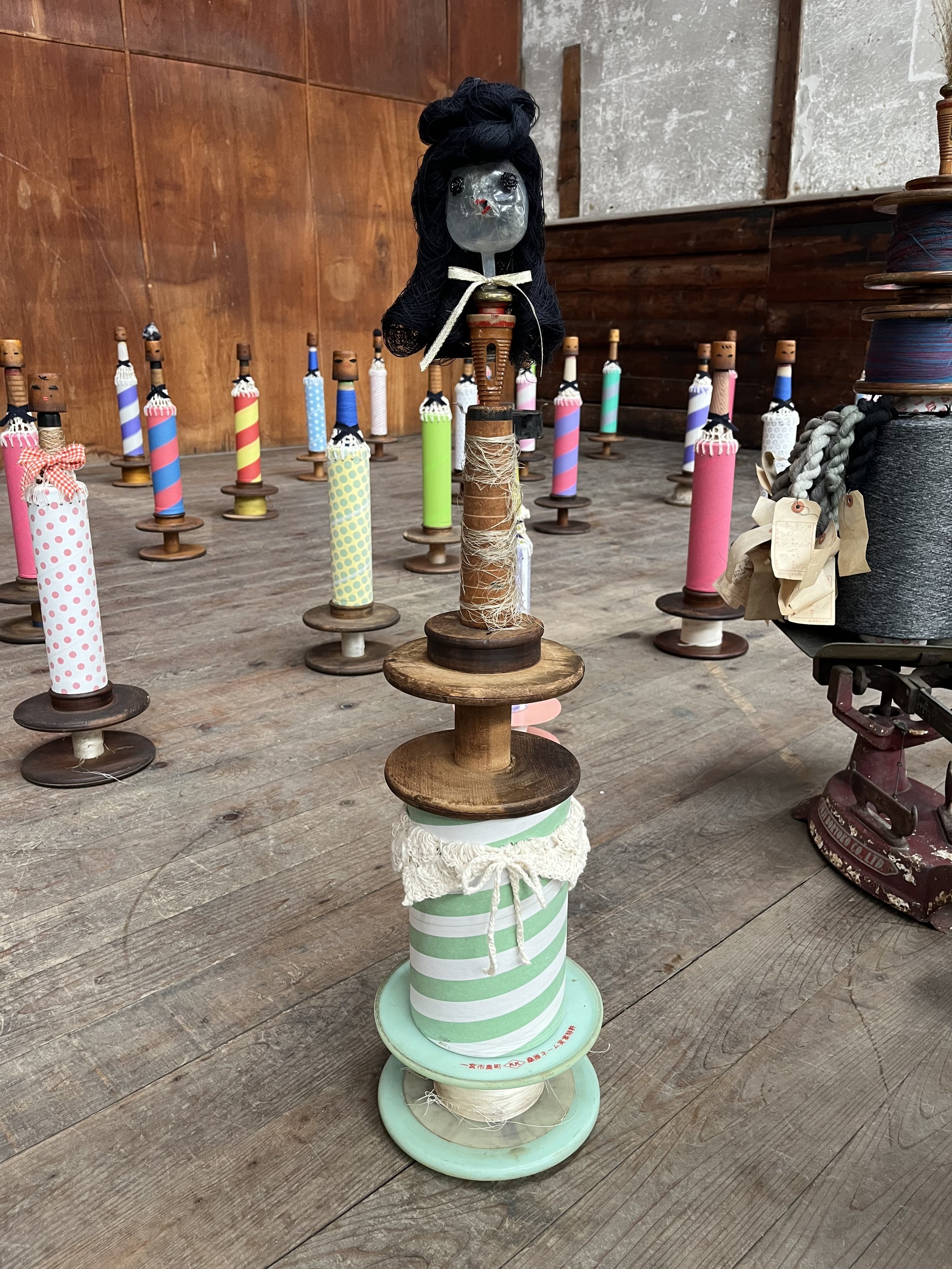
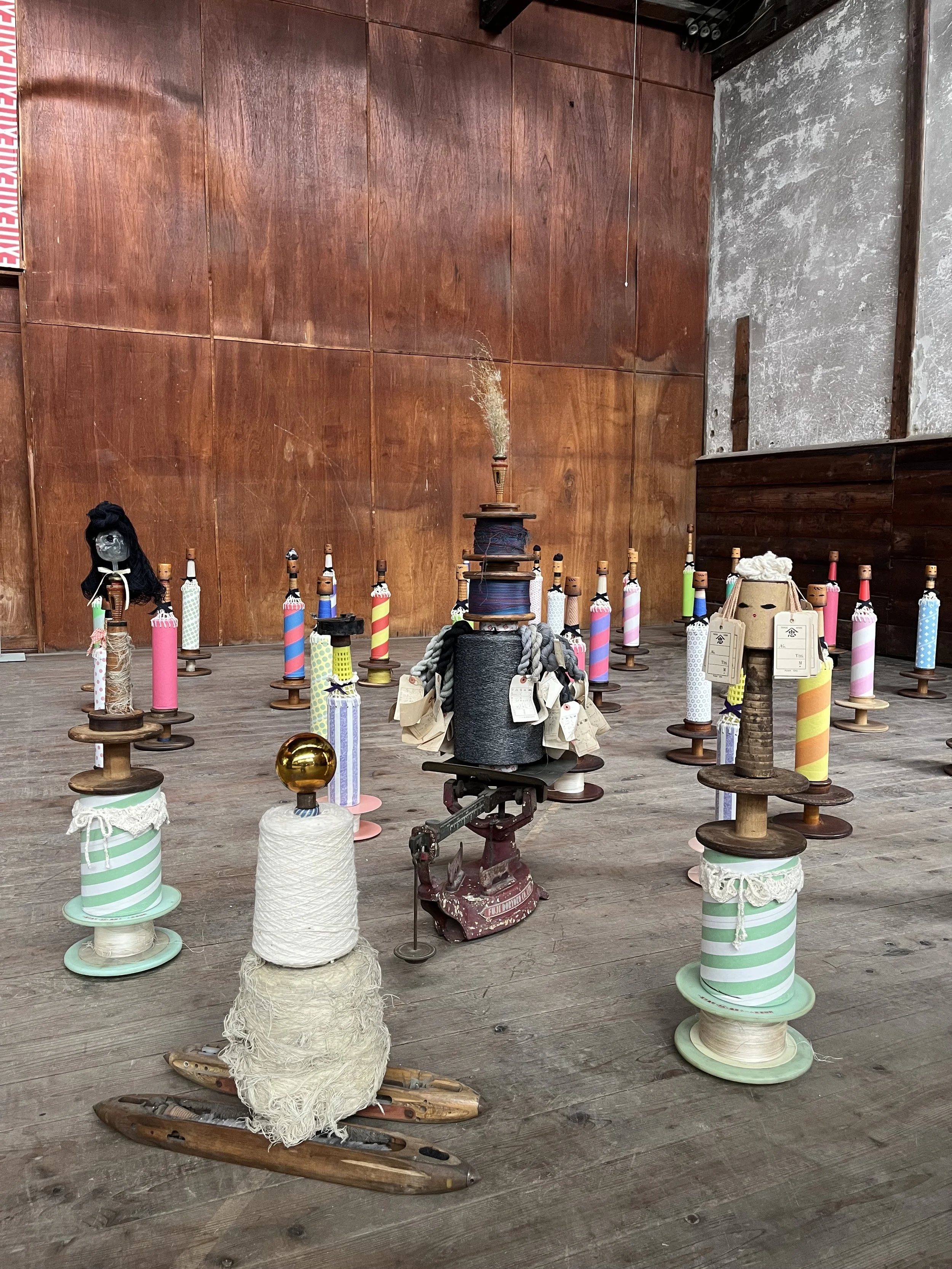
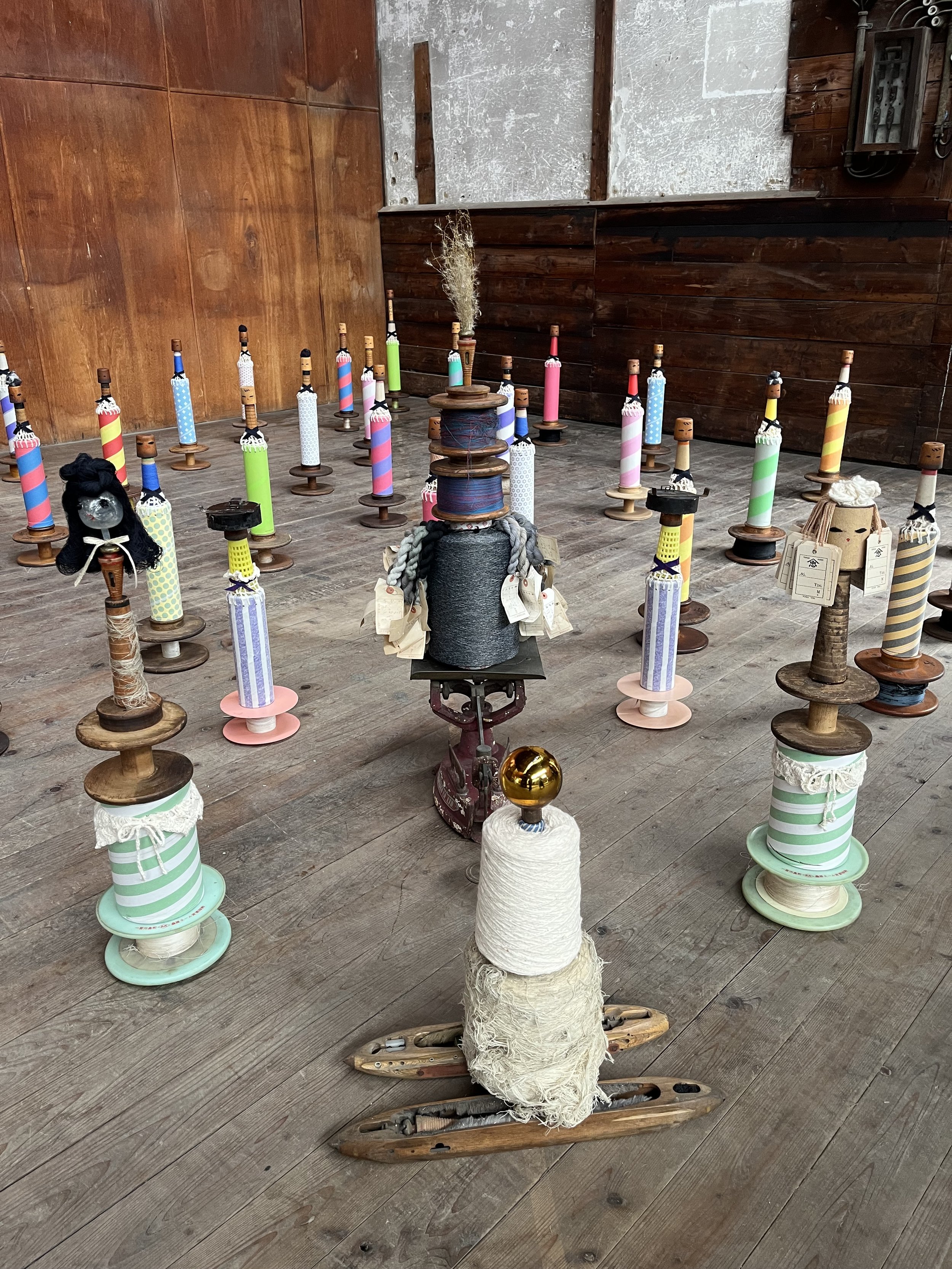
Inspired by the image of those girls, the Kokeshi Dolls* of “Factory Girls”*were created by connection across generations, such as from the thread spools still used in the factory today, remnants left behind in the old factory, and fragments I found, all crafted by hand with thread produced in Ichinomiya. 35 figures include 31 Kokeshi Dolls* of "Factory Girls"* and 4 of their bosses. 31 is the number of female factory workers who were unable to escape and died in a fire at a local factory in 1900.
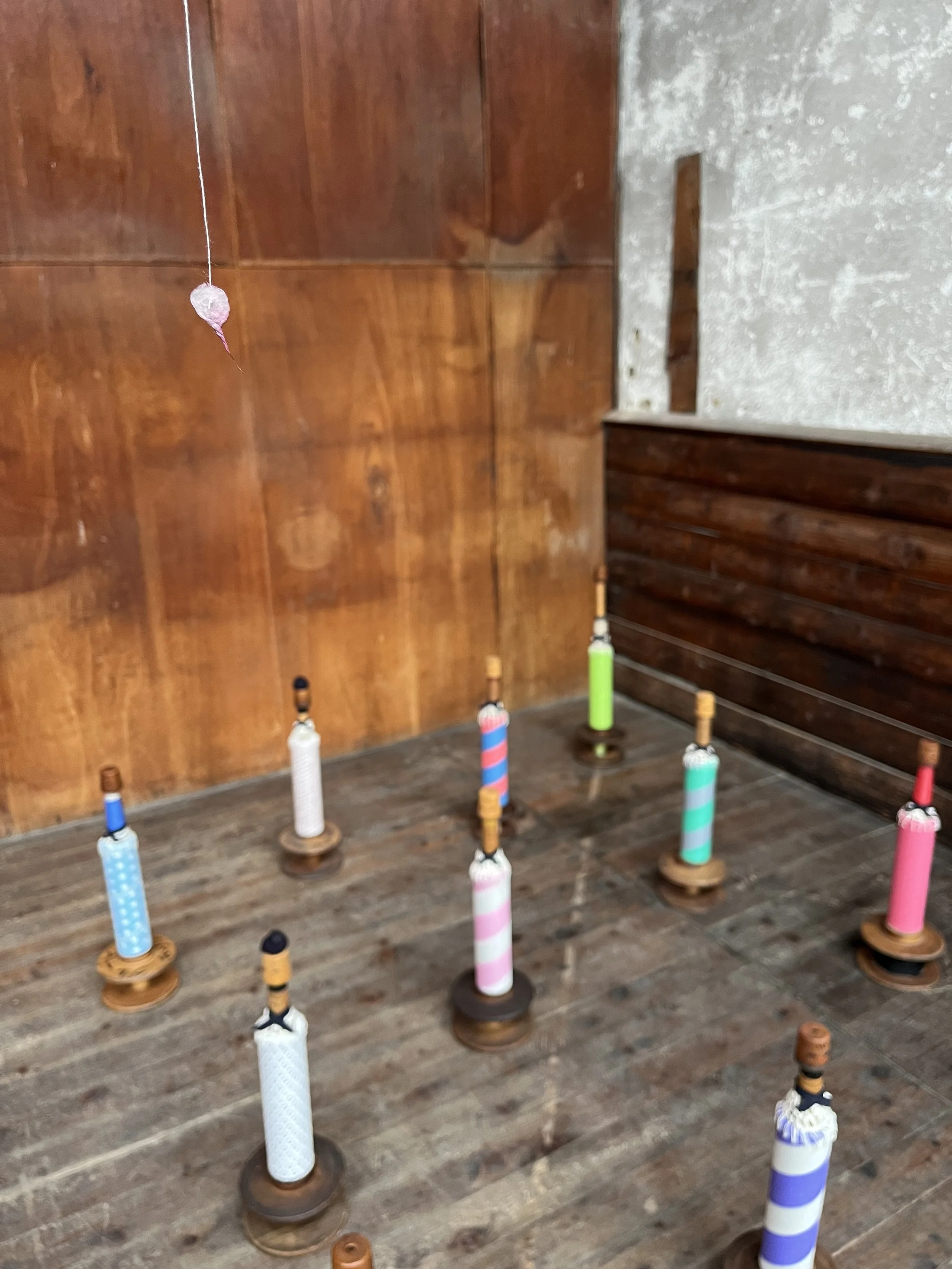
A Sakura petal made of torn washi paper, which signifies an individual's life, is suspended from the ceiling by a white thread salvaged from the site and hovers above the installation, as if in tribute to the female workers who worked here.
Dedicated to the girls who spent their youth in this area, dreaming of the future.
* The term "Joko, or Factory Girls "carries misogynistic connotations and is considered an inappropriate expression in modern times. In this exhibition, however, it is intentionally used to convey the nuances of the time.
* Kokeshi Dolls are traditional, handcrafted wooden dolls with 150 years of history, characterized by a simple, limbless cylindrical body and a round head, symbolizing good luck.
「女工さん」*の初恋
一宮を訪ね、在りし日のにぎやかな面影に想いをはせる。美しい庭園とお屋敷の跡、色あせた商いの看板。栄華を極めた毛織物産業の舞台裏、当時「のこぎり屋根工場」で働いていた少女たちのことを想いました。
かつて“織姫”と呼ばれた元「女工さん」* のお話をうかがうことができました。15歳で知らない土地に来て、夜明けから夜更けまで週六日間の重労働を十年間。故郷は恋しかったけれど自分よりも苦労をしているお母さんに仕送りができることが幸せだった。「そういうものだったのよ」と、繰り返し言っておられたのが印象的でした。
六畳一間、住み込みの部屋で寝起きを共にした友だちとは「今でも仲良くしています」と、遠くを見つめる優しい眼差しに、彼女たちの日々の会話、友情は、初恋は、どんな風だったのだろう?どんな夢を未来に描いていたんだろう?と想像するのです。
産業経済が繁栄する影には社会的弱者、少女たちの労働力があり、その多くは過酷な状況であった事は忘れてはいけません。そのなかで、静かな花の香りのようにたち込めていた思春期の少女たちの想像力。それは人が生きていくための強さであり、見習うべき知恵であると思うのです。
そんな少女たちの面影にインスピレーションを受け、現在も工場で使用されている糸巻きの芯や、古い工場に遺されたもの、見つけたカケラ、それらを一宮で生産された糸で繋げ生まれたのが「女工さんこけし」* たちです。こけしの数は全部で35。そのうち31が女工さんこけし、4は工場長、会長、重役などです。1900年におきた『光明寺村女工焼死事件』織物工場の火災で逃げられずに亡くなった少女たち犠牲者の数は31名でした。
「ひとひらのいのち」のような和紙の桜の花びらが、工場で見つけた古い白い糸に結ばれ天井から吊られ揺れています。
この地で未来への夢を見ながら青春時代を過ごした少女たちへ。
*「女工」という言葉には女性蔑視的意味合いが含まれるため、現代では、配慮すべき表現とされています。今回の展示では、当時のニュアンスを感じ取ってもらうためあえて使用しています。
HIGHLIGHTS from the Artist Talk April, 24 2026 at mh PROJECT
(English captions are provided at the bottom right of the screen)
Guest speaker: Makiko Onda, Program Director, Arcus Project, Ibaraki, Japan
Cinematographer: BANSOMA
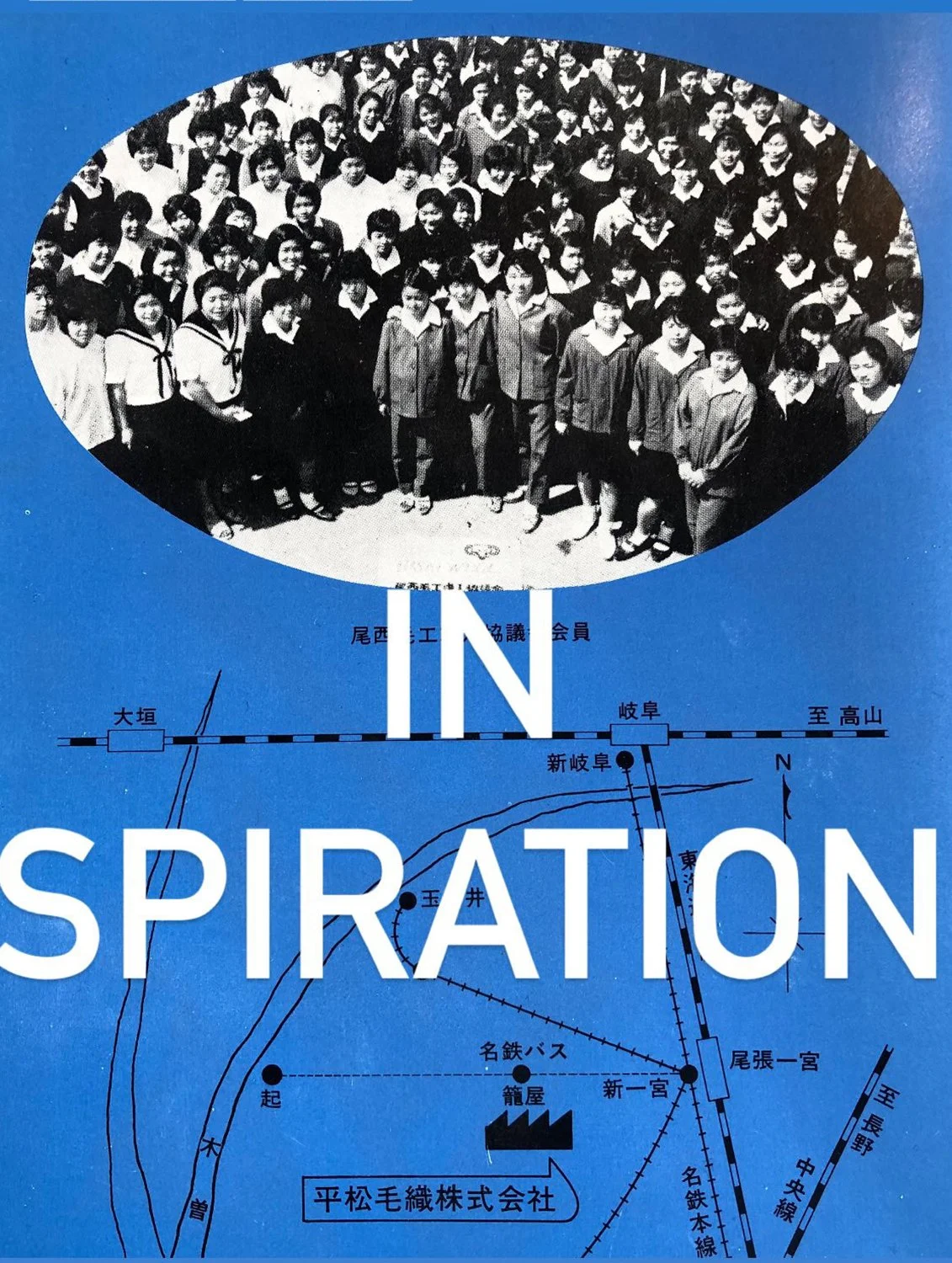
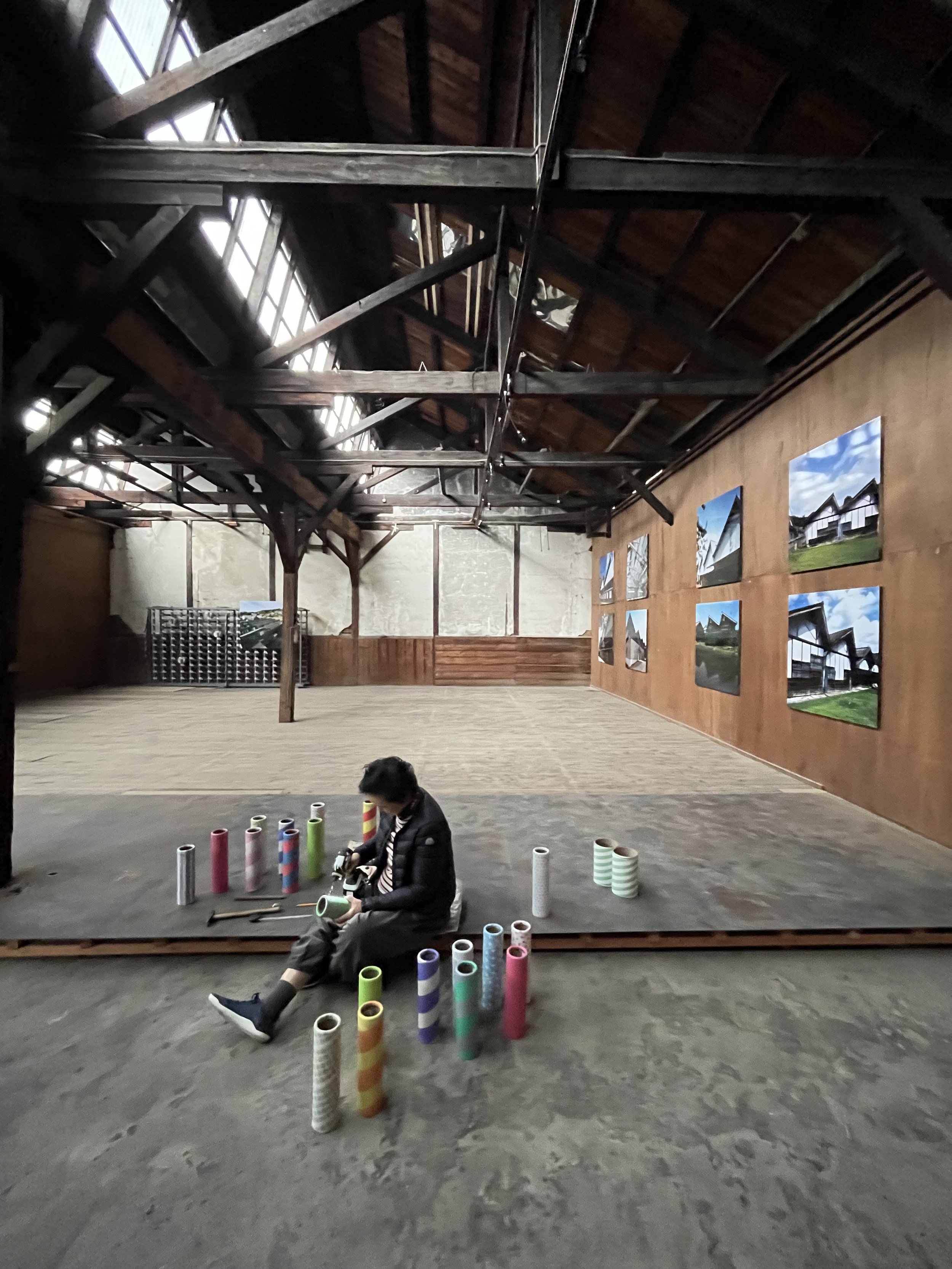
Creative Residency at the saw-tooth roof old weaving factory in Ichinomiya town, Aichi, Japan
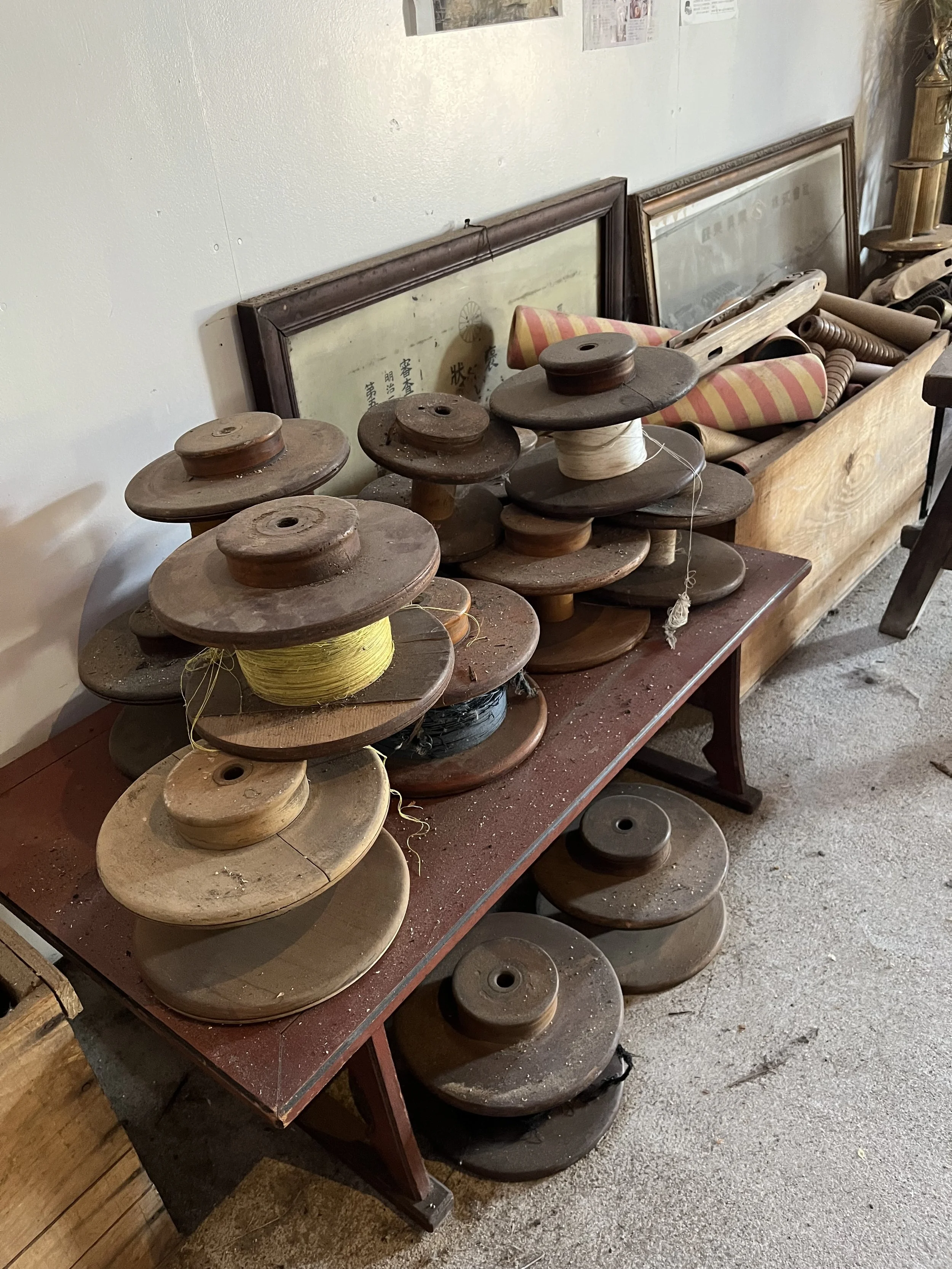
Old spools: Salvaging materials from the past and present in Ichinomiya
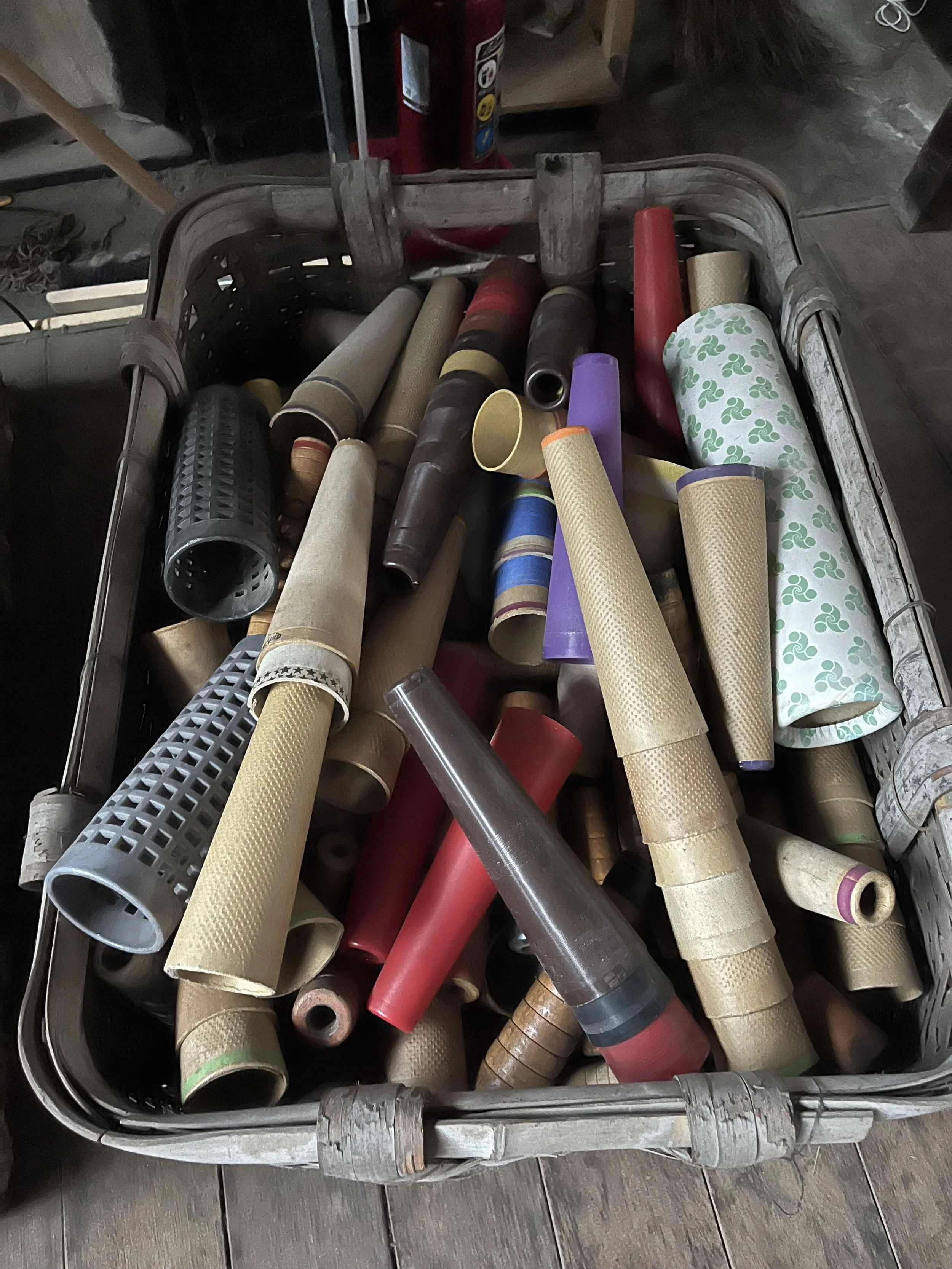
Salvaging materials : old cone bobbins
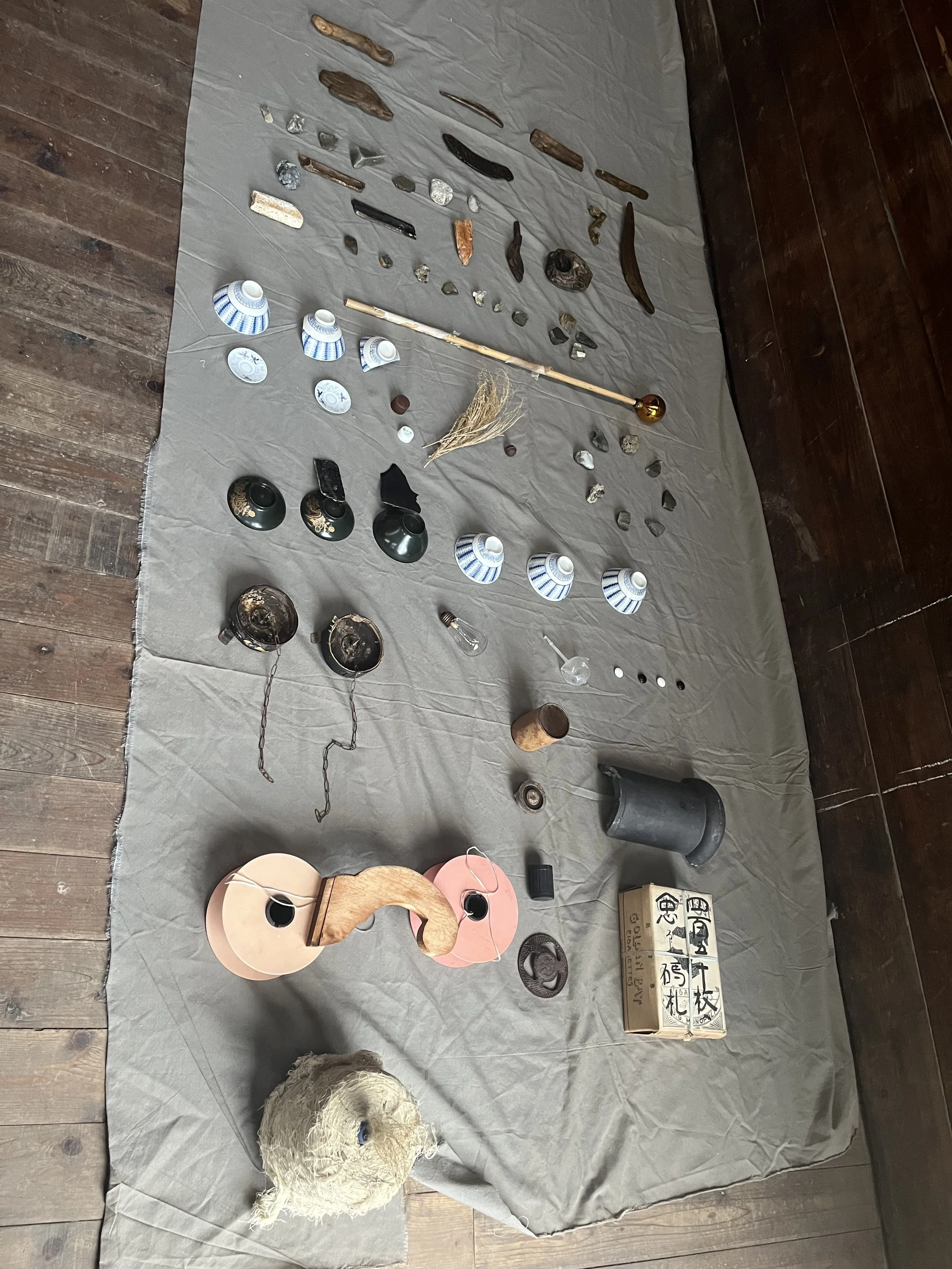
Salvaging materials
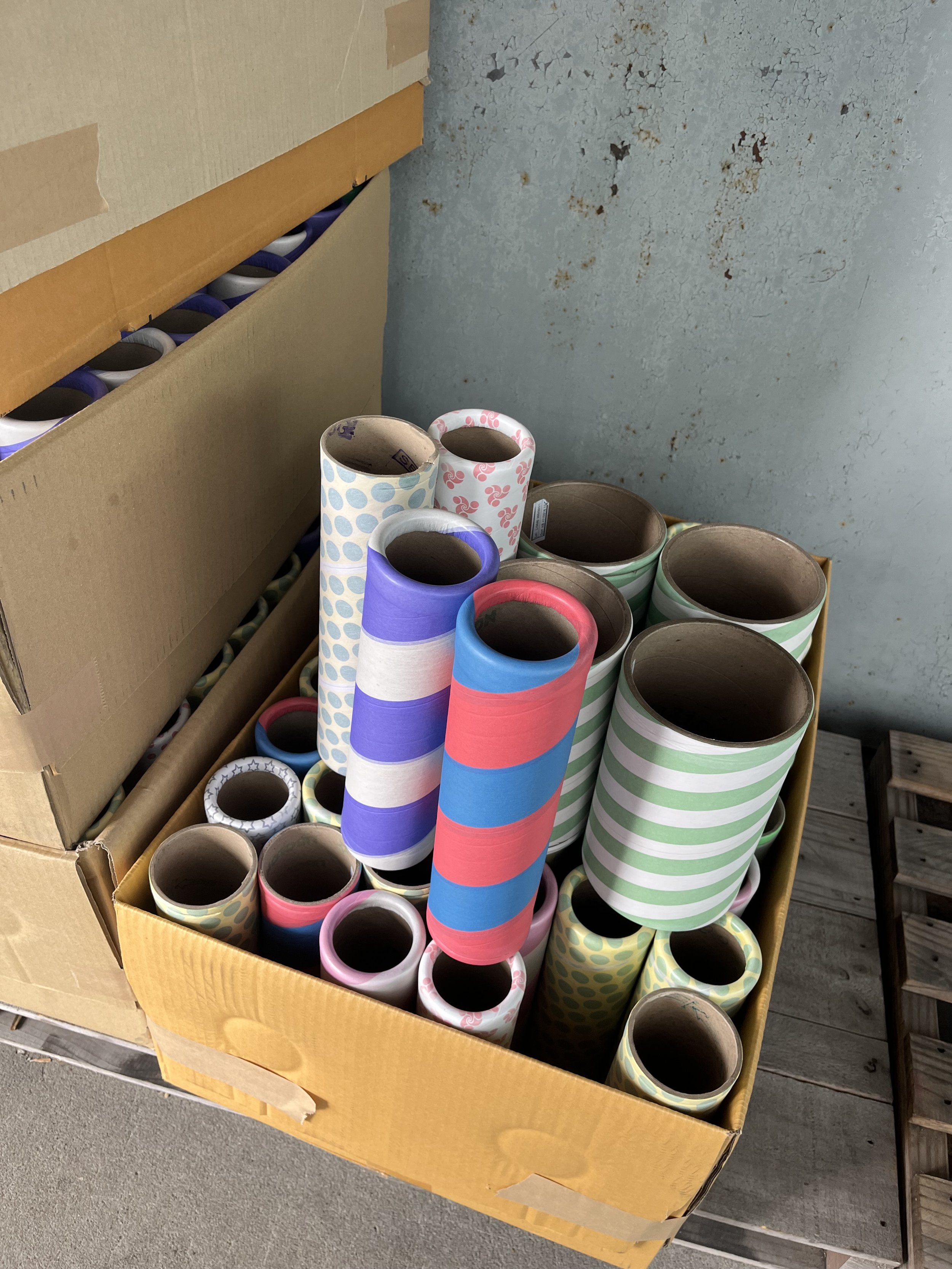
Modern paper cone bobbins : Salvaging materials from the past and present in Ichinomiya
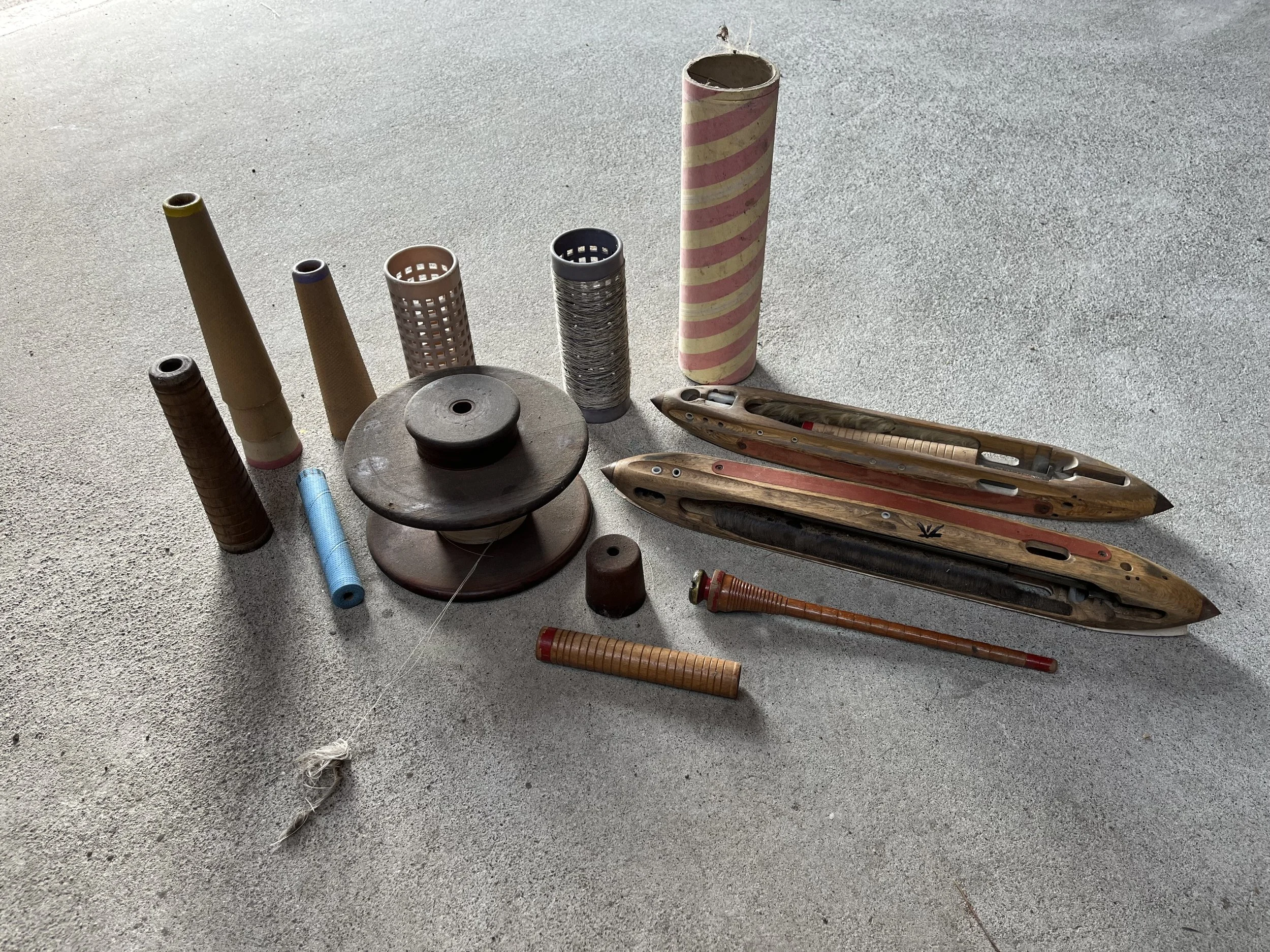
Salvaging materials from the past and present in Ichinomiya

Kiso River : Salvaging and foraging materials
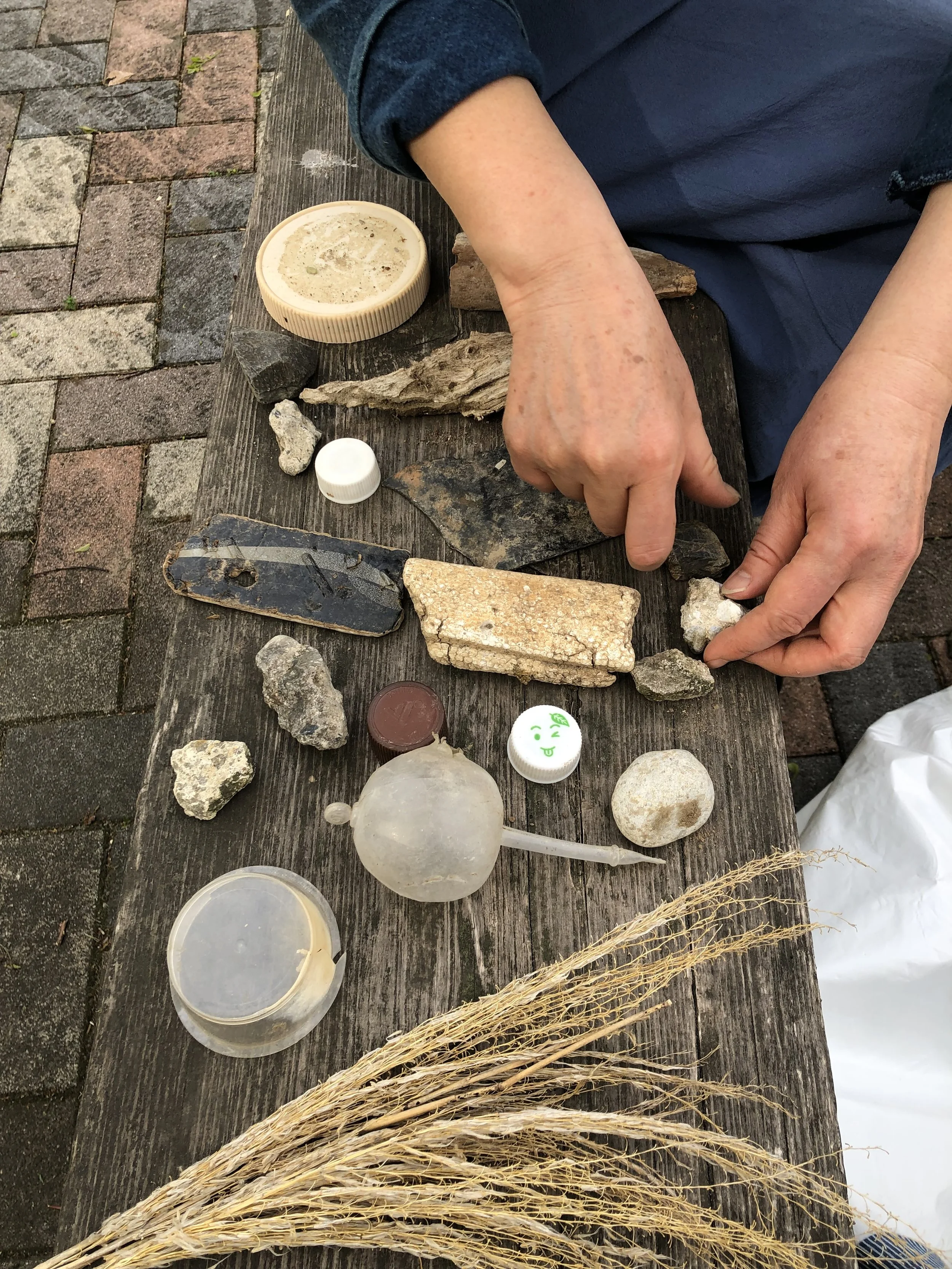
Kiso River: Salvaging and foraging materials
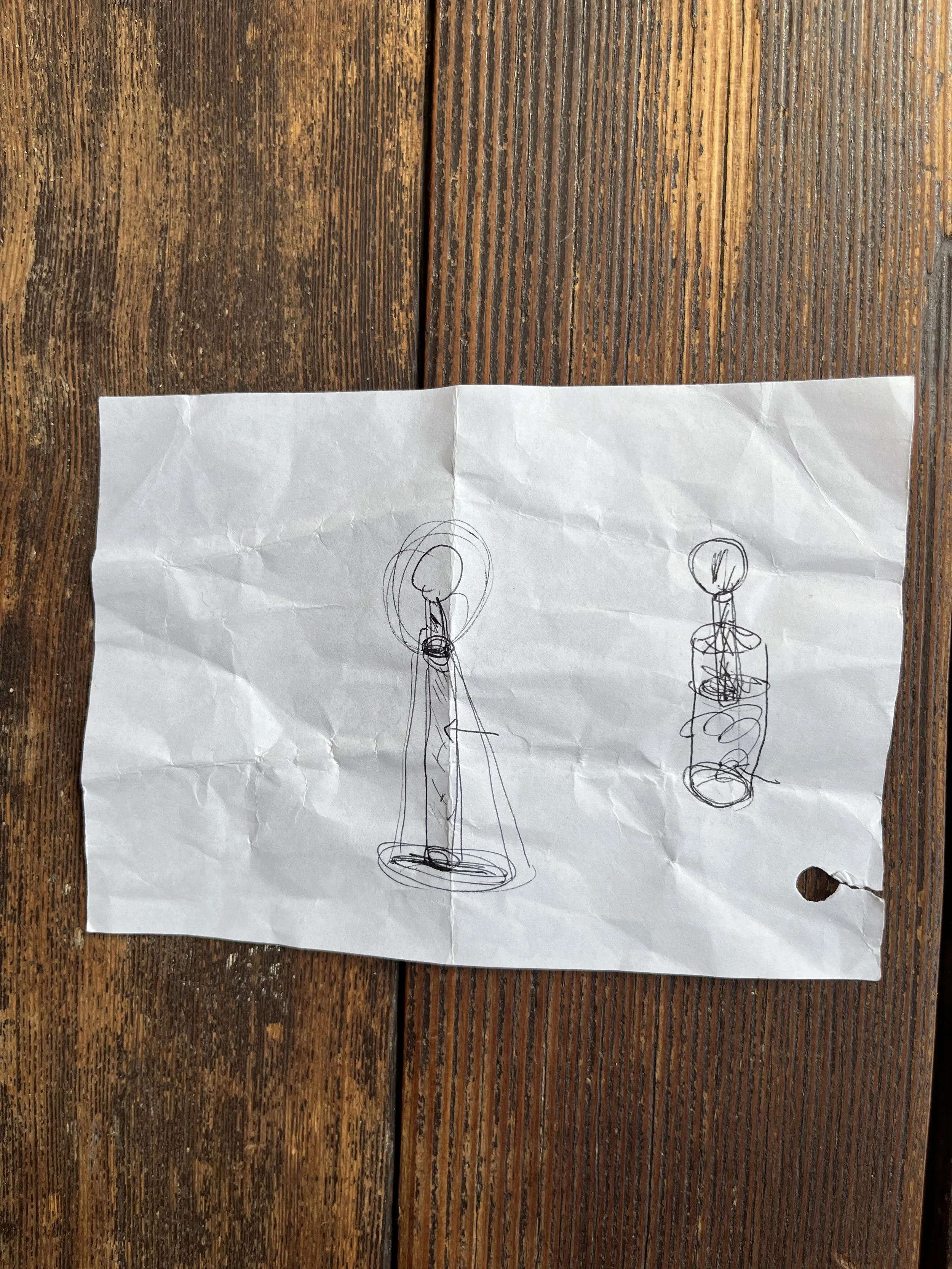
Creative process of the “Kokeshi Dolls of Factory Workers”
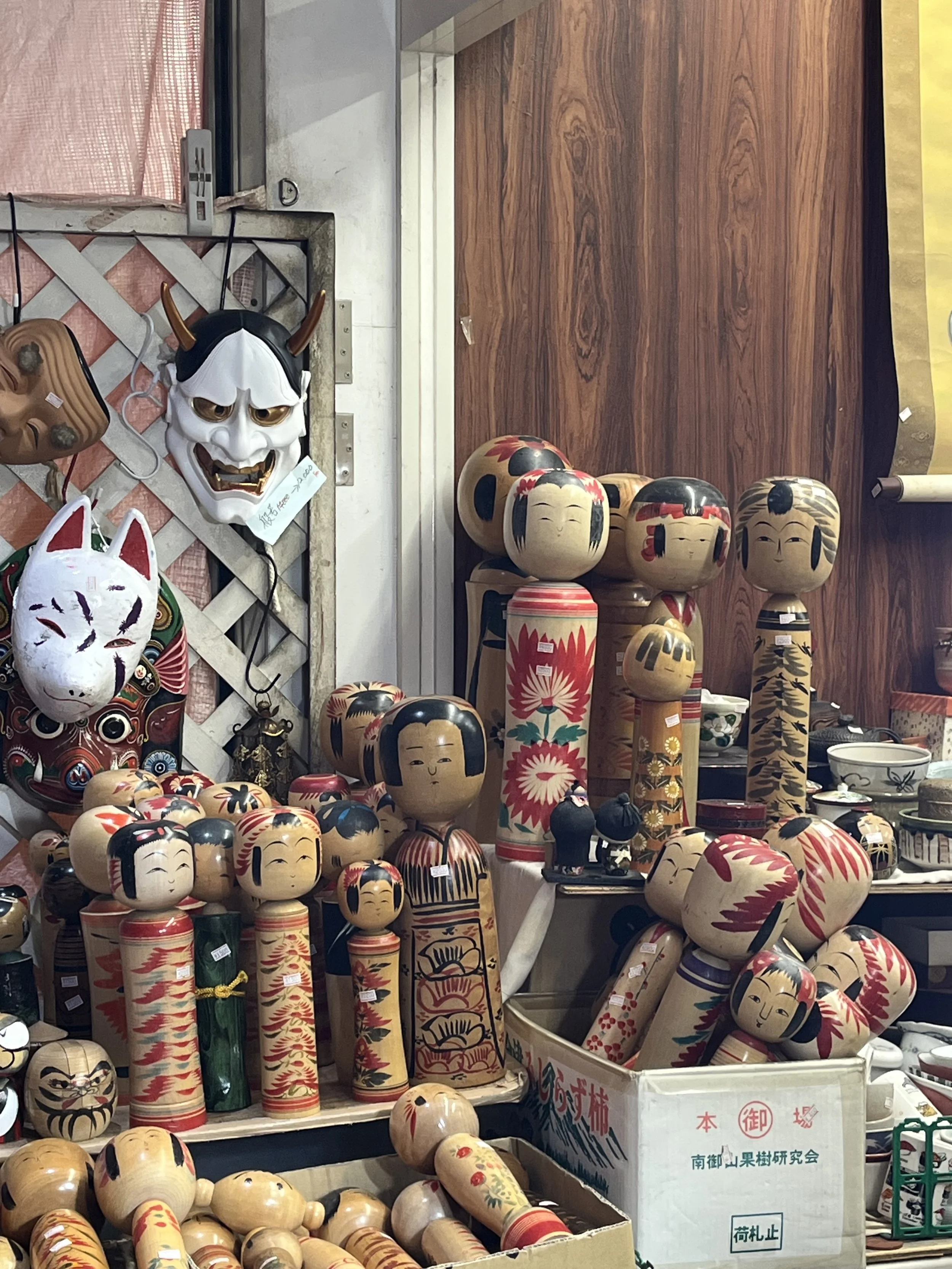
"Kokeshi Dolls" are traditional, handcrafted wooden dolls with 150 years of history, characterized by a simple, limbless cylindrical body and a round head, symbolizing good luck.
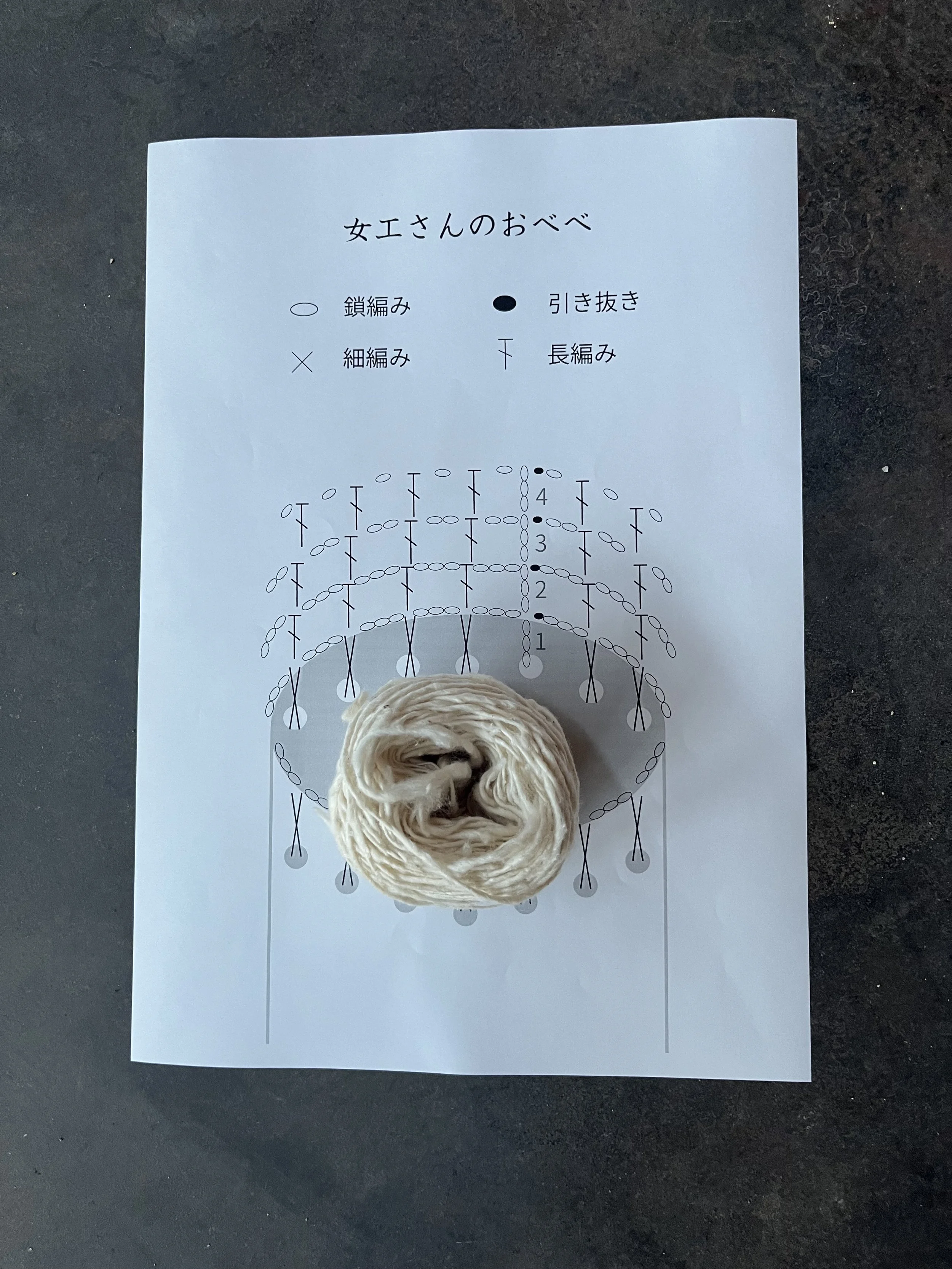
Collaboration with local residents through the crochet workshop for part of the “Kokeshi Dolls” making led by Pirkatane/Nami Tahara
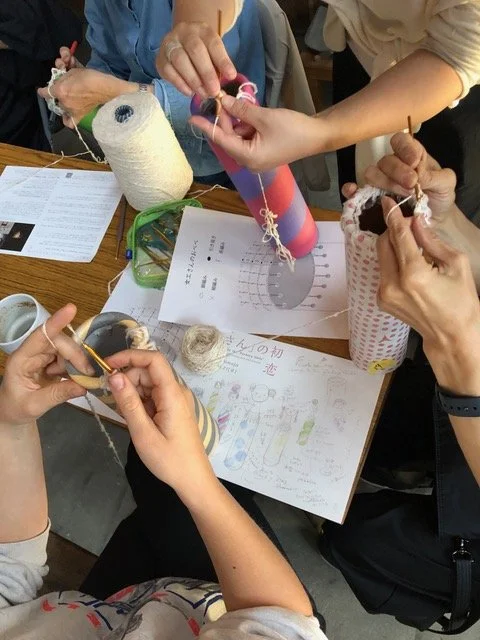
Collaboration with local residents through the crochet workshop for part of the “Kokeshi Dolls” making led by Pirkatane/Nami Tahara
Collaboration with local residents through the crochet workshop for part of the “Kokeshi Dolls” making led by Pirkatane/Nami Tahara
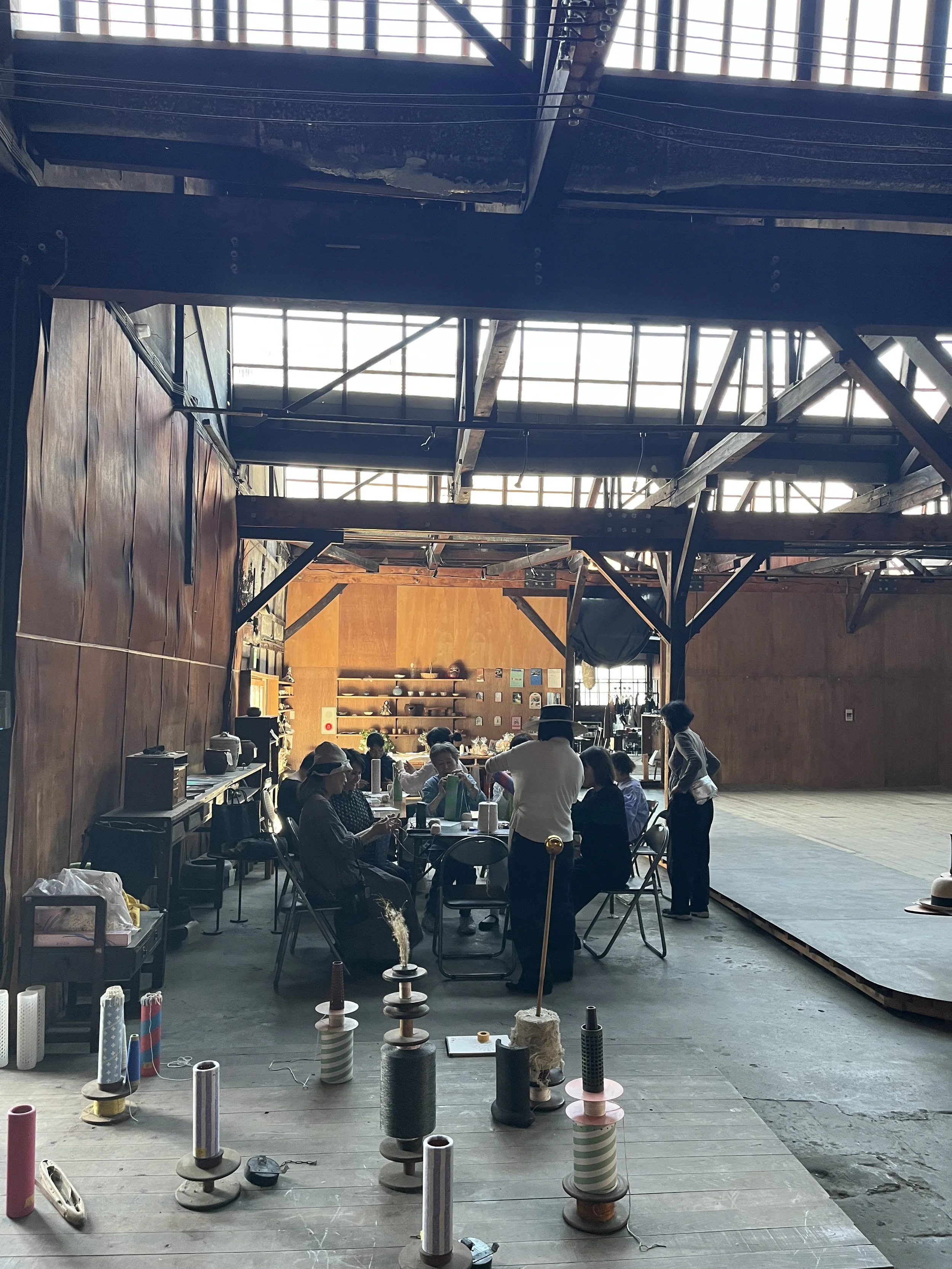
Creative Residency at the saw-tooth roof old weaving factory
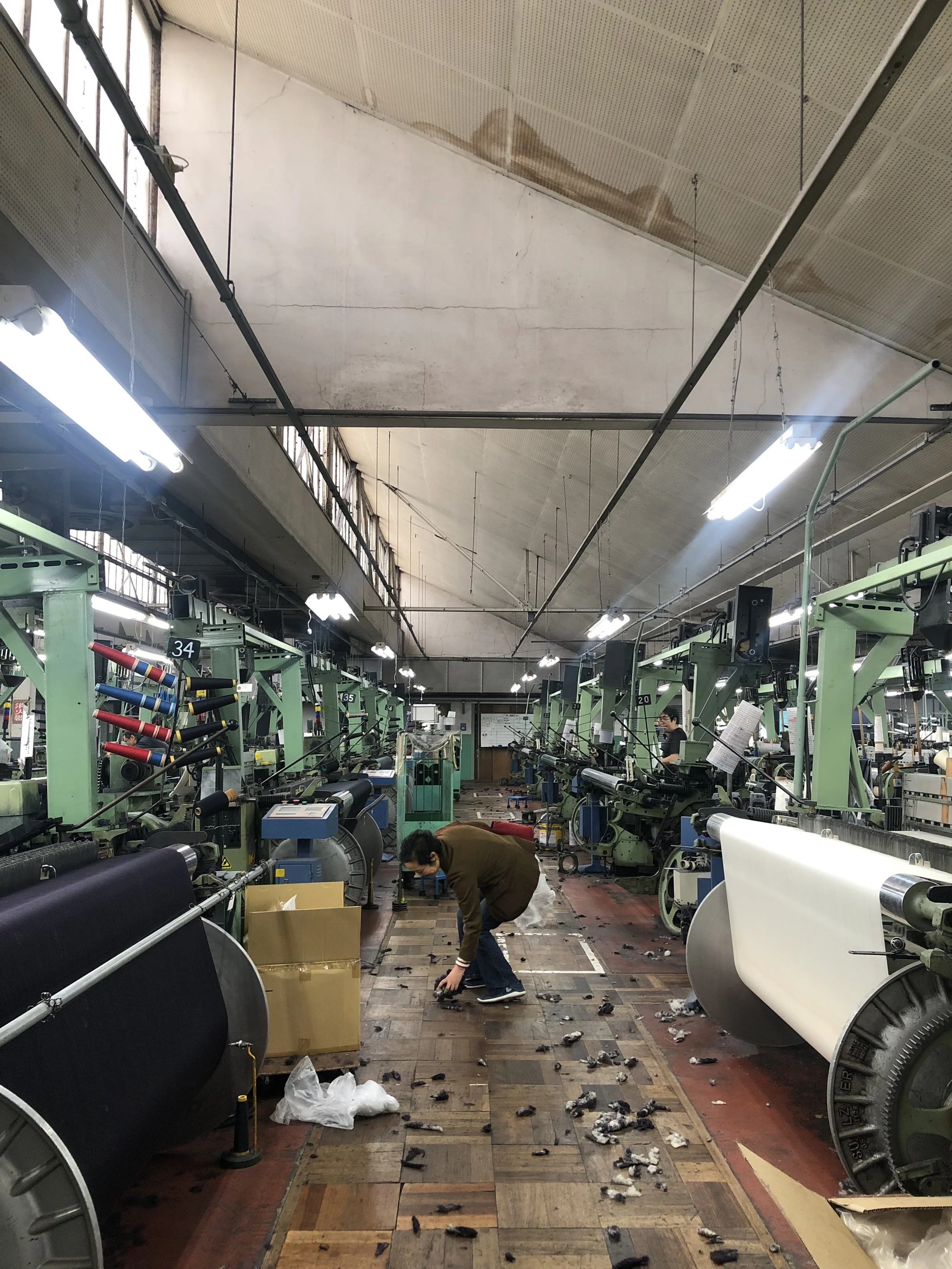
Salvaging materials from the active weaving factory in Ichinomiya
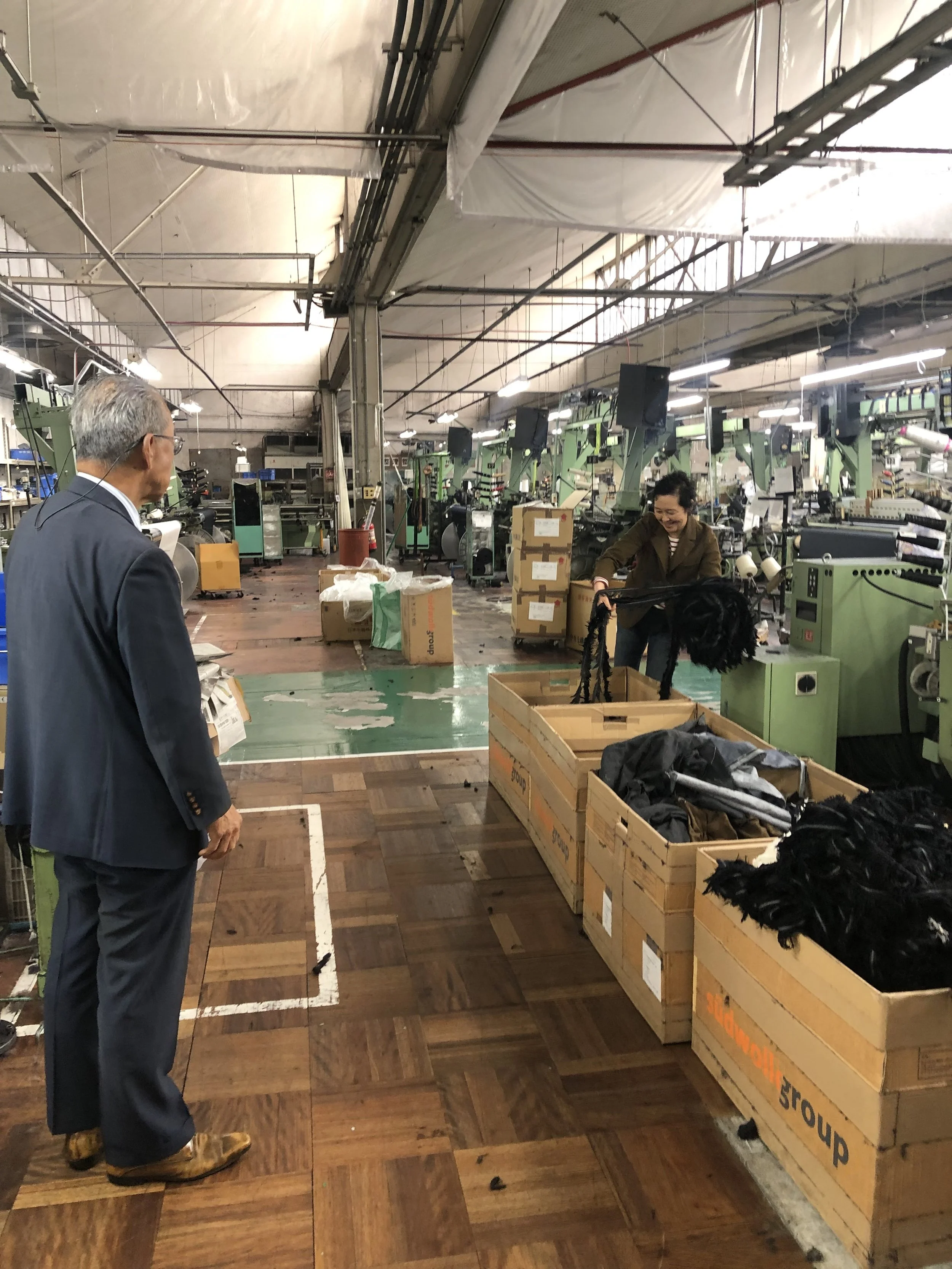
Salvaging materials from the active weaving factory in Ichinomiya
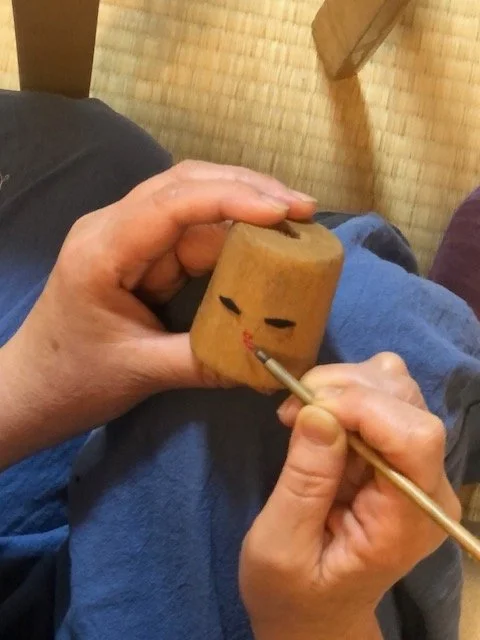
Hand-painted face of 31 "the Kokeshi Dolls* of Factory Girls”*: "31" is the number of female factory workers who were unable to escape a fire at a local factory in 1900.
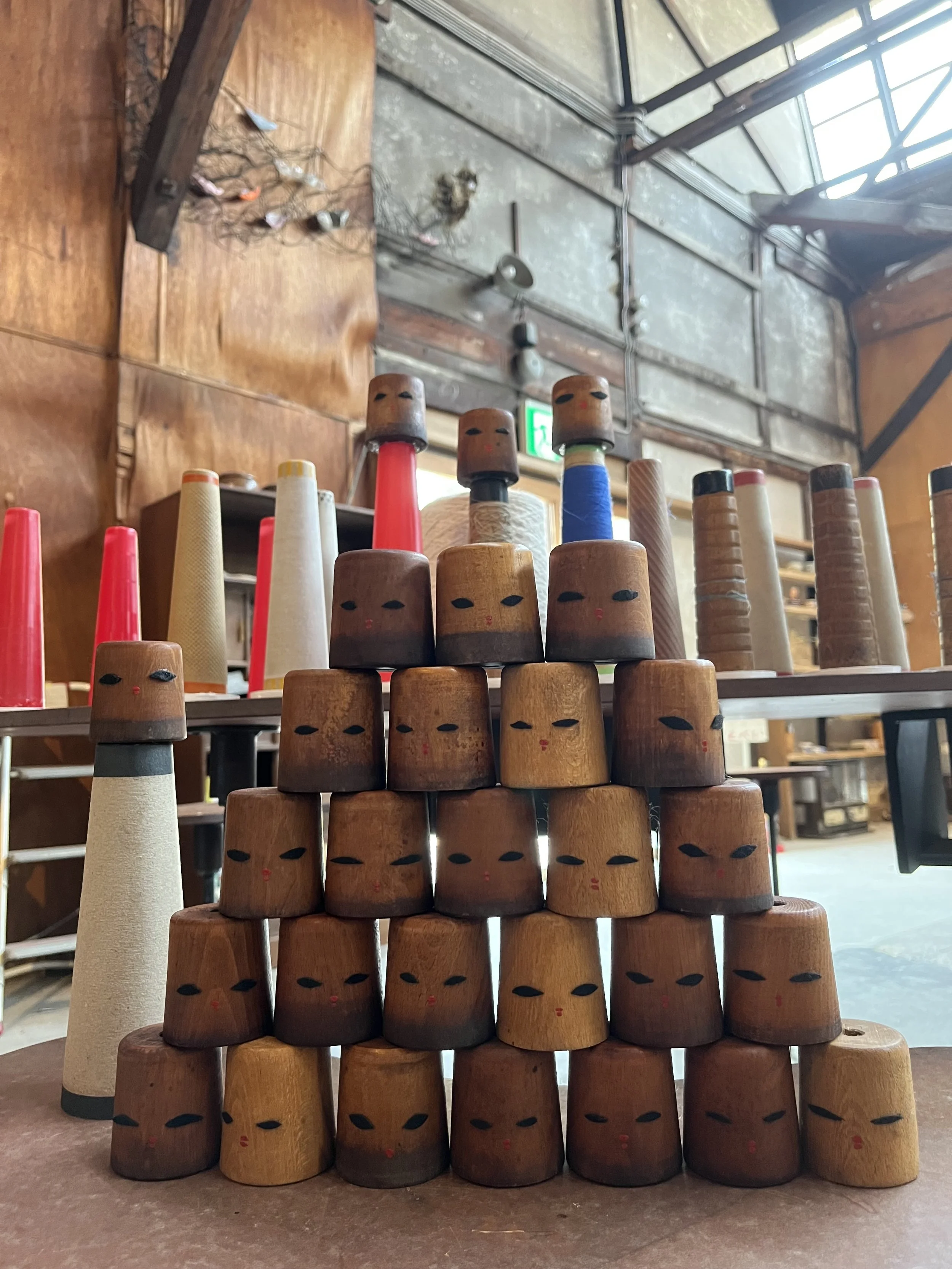
Detail of some painted faces of 31 "the Kokeshi Dolls* of Factory Girls”*
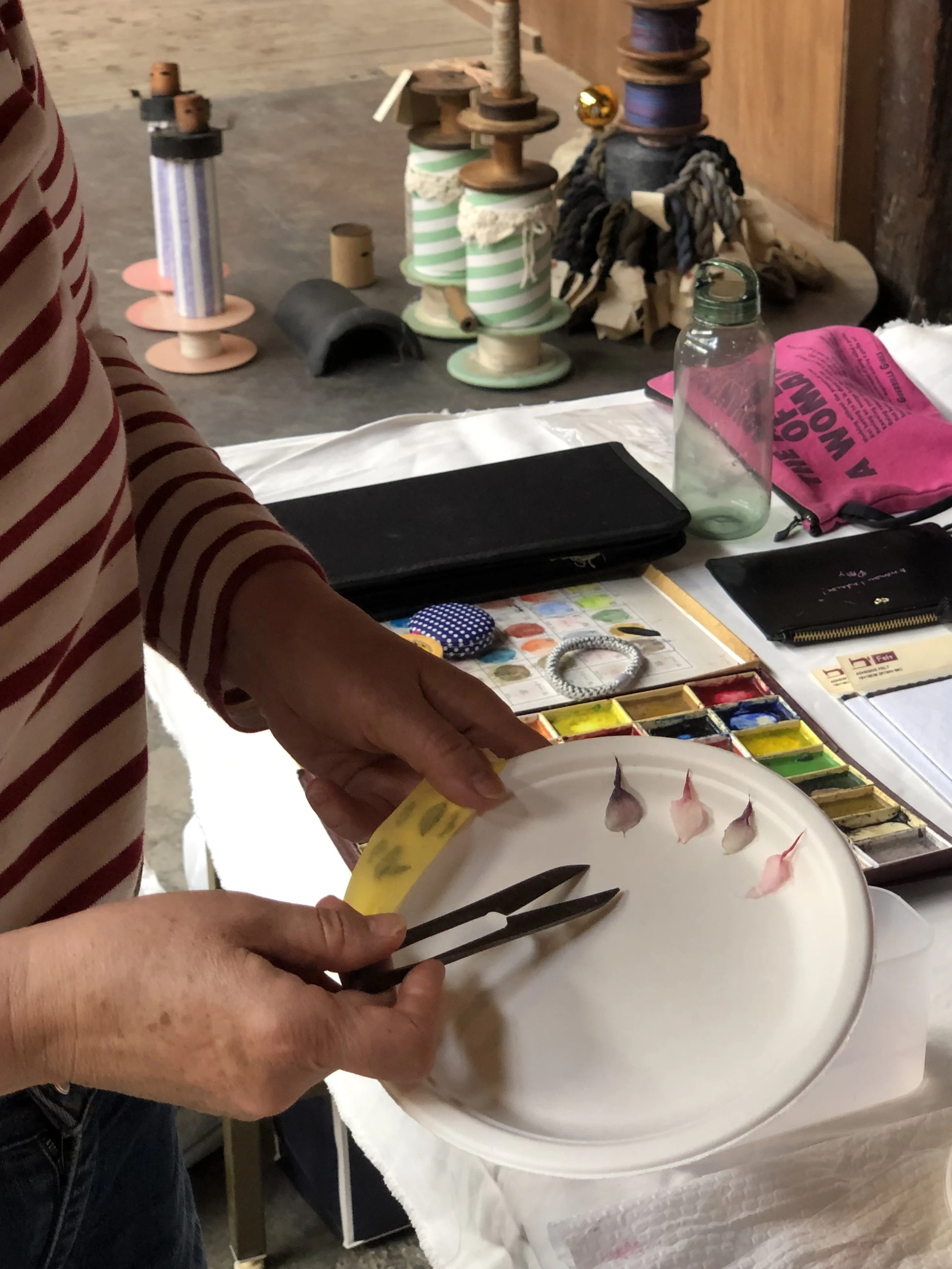
Chosing one of Sakura petals made of torn washi paper, which signifies an individual's life. One is suspended from the ceiling by a white thread salvaged from the site, hovering above the installation.
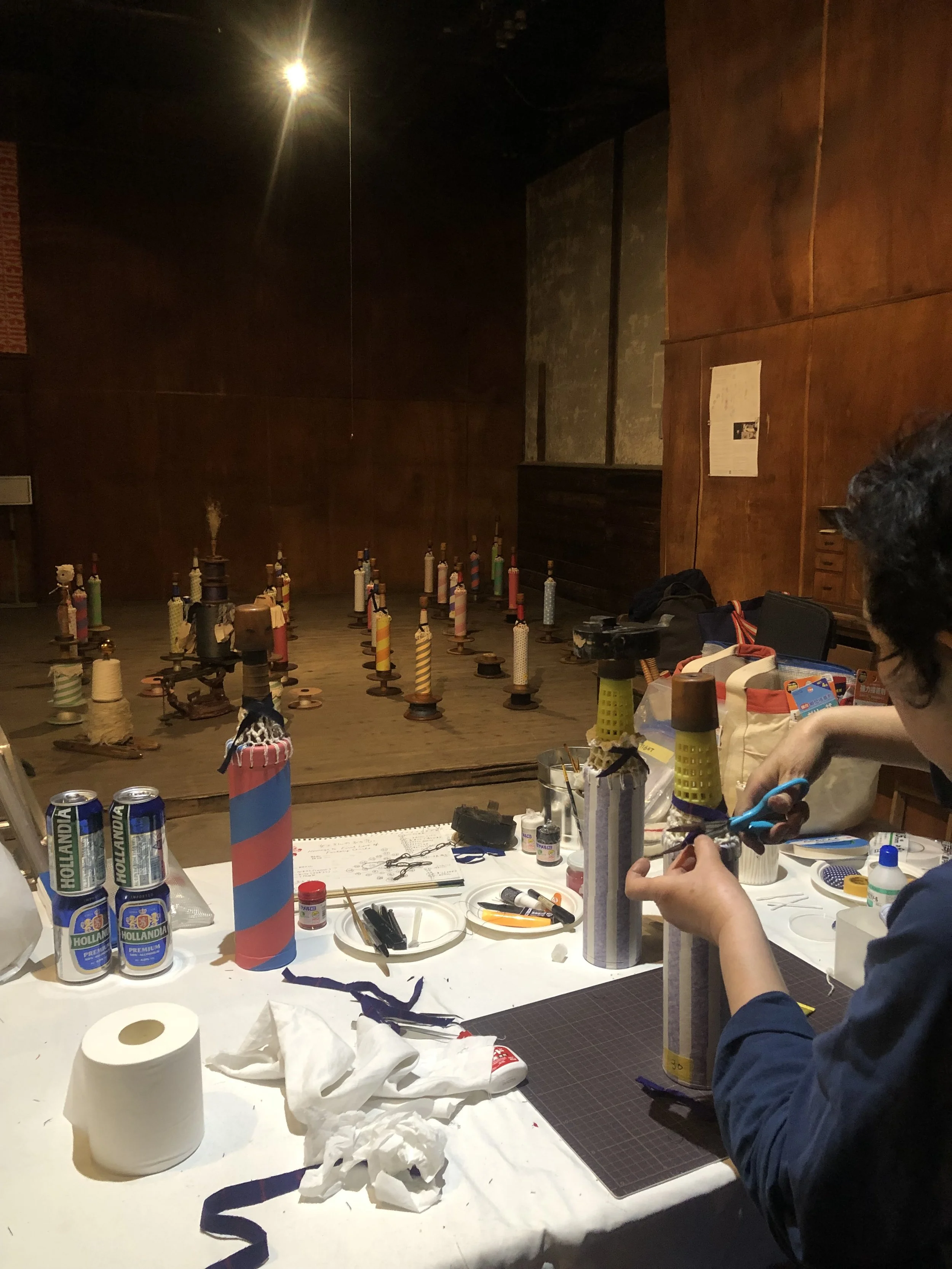
Creating process of 31 "the Kokeshi Dolls* of Factory Girls”*
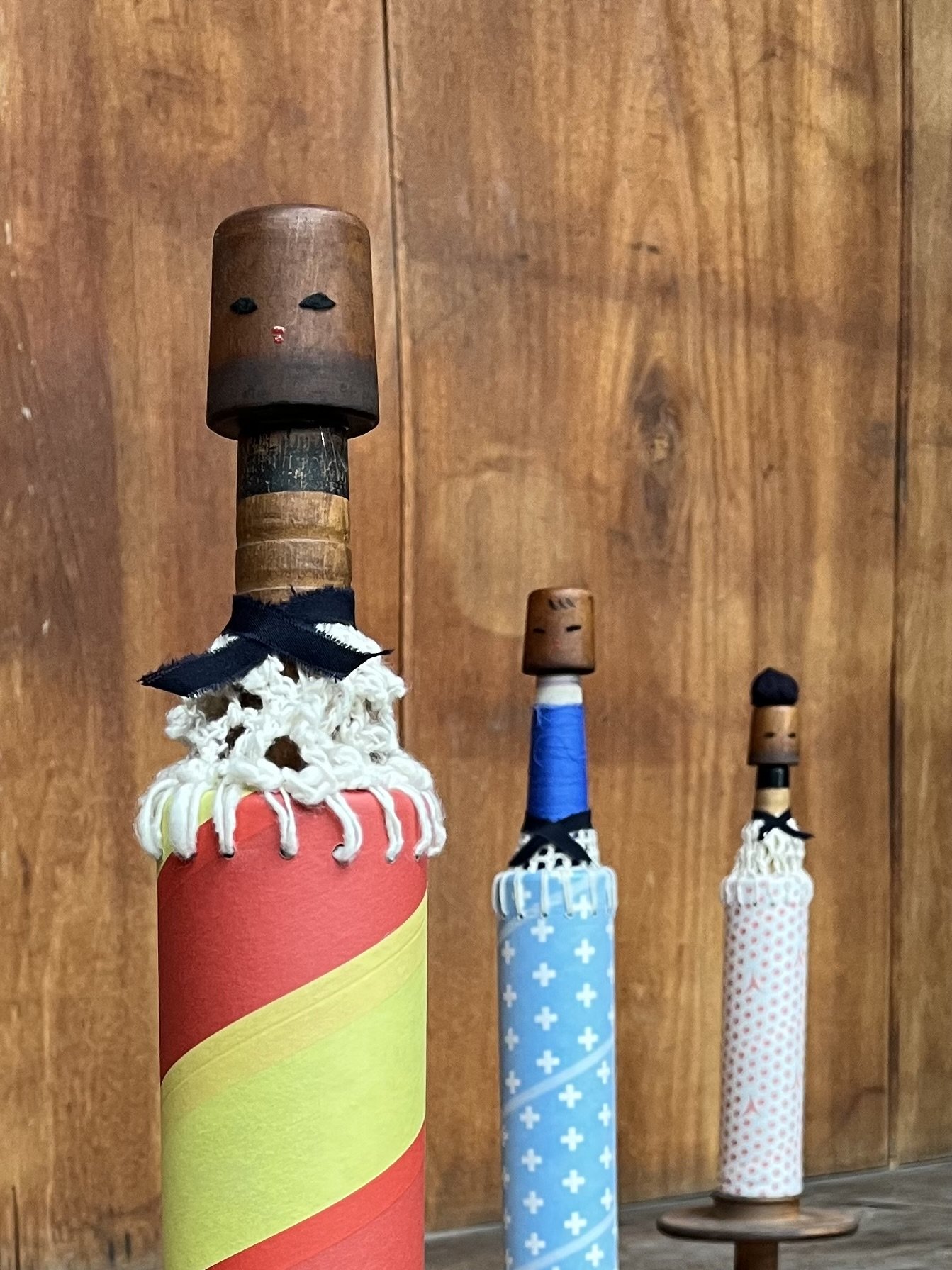
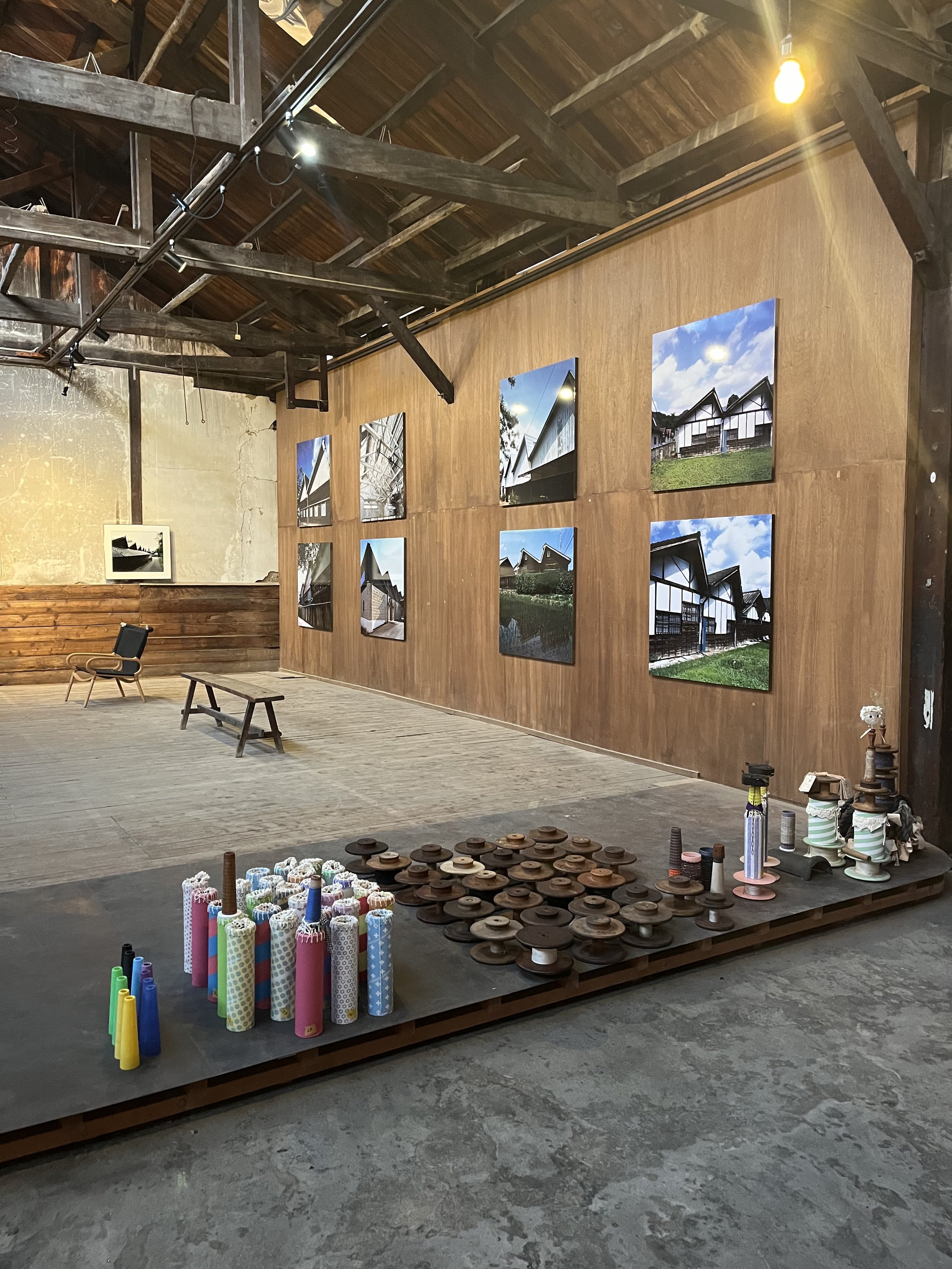
Detail of Installation view
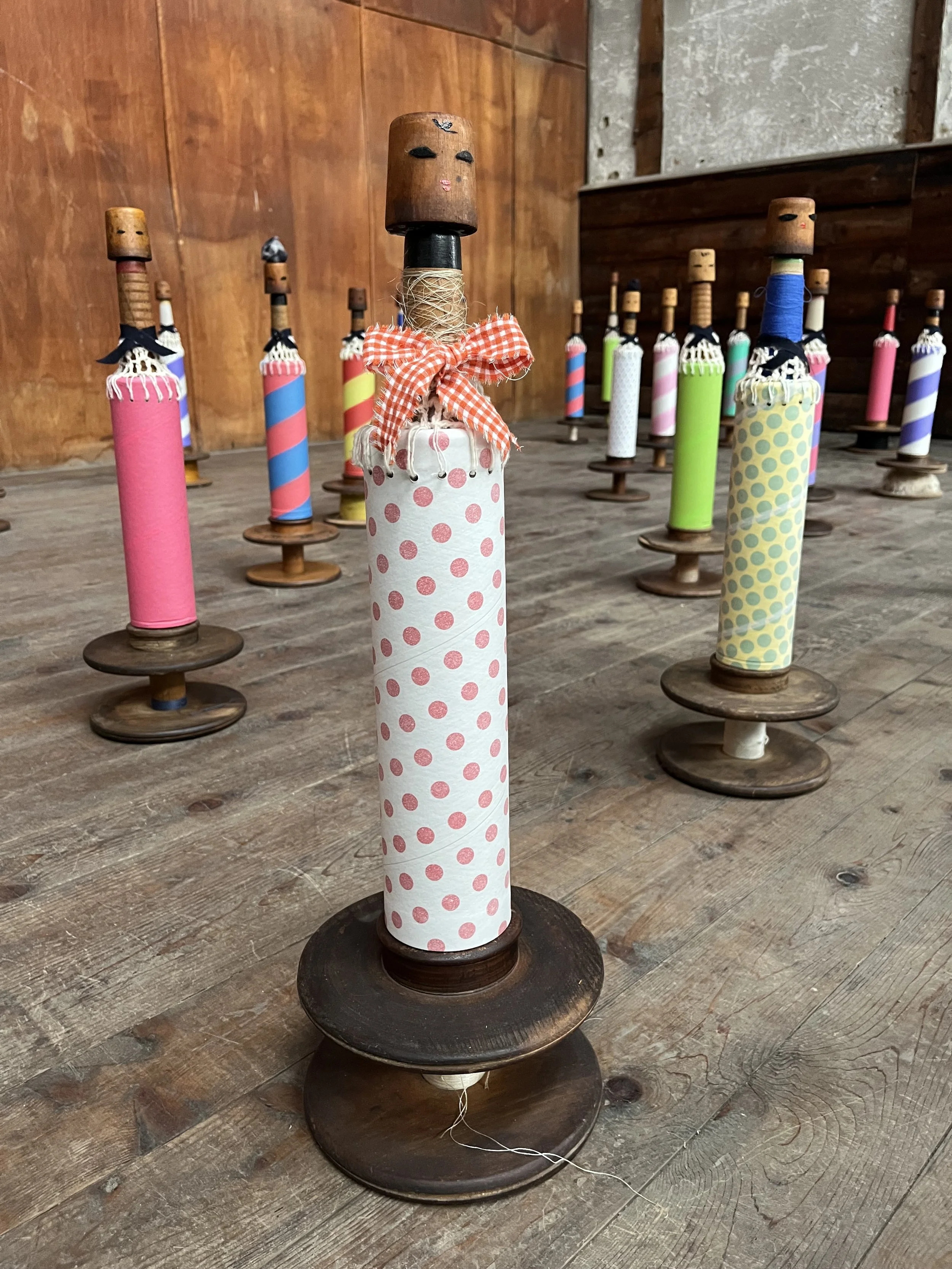
Detail of Installation view: "Marylin"